
Bezos Bets $100 Billion on Physical Manufacturing, Changing Everything
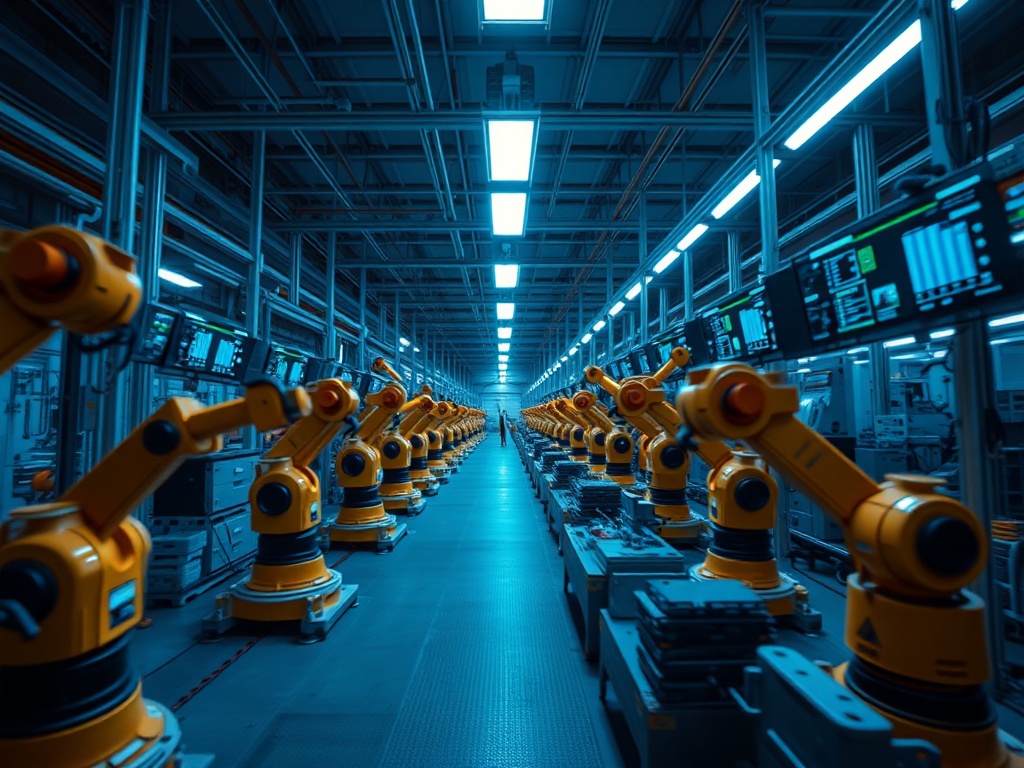
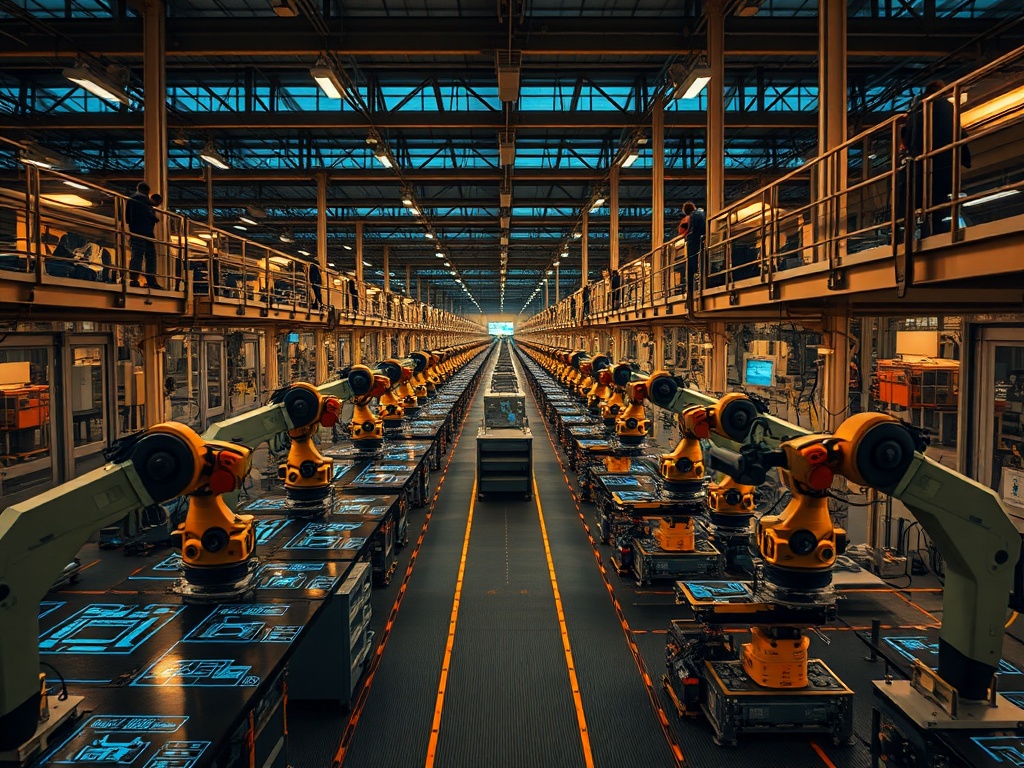
On March 19, 2026, the Wall Street Journal reported a story that should have shaken boardrooms more than it did: Jeff Bezos is assembling a $100 billion fund to acquire manufacturing companies and integrate artificial intelligence into their operations. This isn’t venture capital; it’s not a speculative bet on a startup. It’s a massive buyout vehicle, internally described as a "manufacturing transformation vehicle," targeting specific sectors like semiconductor manufacturing, defense, and aerospace.
The scale is hard to comprehend. Bezos’s fund rivals the size of SoftBank's Vision Fund, which was previously considered an anomaly in capitalism. What isn’t an anomaly, for those who have closely followed Bezos's operational trajectory, is the direction this decision signals.
Why Manufacturing Instead of Software
The logic behind this move starts with arithmetic that most tech investors prefer to ignore. Software represents approximately $1 trillion in global economic activity, while manufacturing totals $17 trillion. A difference of 17 to 1 that makes the tech industry's collective obsession with digital platforms seem, at least from a capital allocation perspective, a niche choice.
Bezos recognized this before most. Amazon was not just a marketplace; for years, it was the most sophisticated industrial automation lab on the planet. Its distribution network has been automated to the point where, according to some estimates, the company may have more robots than human employees in its warehouse operations today. This story isn’t new; what is new is the scale at which Bezos intends to replicate that logic outside of Amazon and into sectors that have historically resisted automation due to their physical complexity.
The operational vehicle for this bet is Project Prometheus, a Bezos-backed startup that has already raised $6.2 billion in initial funding, with active discussions to add up to $6 billion more, according to the Journal. Its stated mission is to build artificial intelligence models designed to understand and simulate the physical world: factory operations, supply chains, product design, engineering processes. This isn't management software under a different name. It’s an attempt to create an intelligence layer that transforms a manufacturing plant into a simulatable and optimizable object before a single screw is tightened.
The governance structure of the project is also noteworthy. Vik Bajaj, co-founder and co-CEO alongside Bezos, is a physicist and chemist with experience running AI projects at Google X and co-founding Verily, Alphabet's life sciences division. David Limp, CEO of Blue Origin, has been appointed to the board. This selection is no accident; Limp brings direct operational credibility in aerospace, one of the fund’s three target sectors.
The Costly Bet: What Bezos Decided Not to Do
Here is where strategic analysis becomes more interesting than the headline. A $100 billion fund aimed at physical manufacturing is, simultaneously, an explicit declaration of what Bezos is choosing to abandon or subordinate.
Since stepping down as Amazon’s CEO in 2021, Bezos has been viewed as an opportunistic investor: backing Physical Intelligence in AI robotics, investing in biotechnology, and pursuing space energy through Blue Origin. The easy narrative was that a billionaire was whimsically diversifying his portfolio. Project Prometheus destroys that narrative. What emerges is a consistent guiding policy: concentrating capital at the intersection of artificial intelligence and the physical world, specifically in sectors where latency between design and production remains the variable that destroys value the most.
This implies concrete and costly renunciations. Bezos isn’t building a general-purpose language model to compete with OpenAI. He isn’t betting on consumer platforms. He isn’t chasing the digital advertising market. Each of these is a multi-billion dollar opportunity that he is deliberately leaving on the table. For an operator of his scale, that concentration of resources comes with an opportunity cost that very few executives would be willing to assume publicly.
The consistency extends to the acquisition model. By structuring this as a buyout fund instead of a venture fund, Bezos signals that he is not looking to bet on startups that might change manufacturing in ten years. He seeks to acquire existing manufacturing companies, with tangible assets, cash flows, and proven efficiency problems, and inject them with the AI layer from Project Prometheus. It’s an operational transformation thesis, not a market-creation endeavor.
Pete Schlampp, CEO of Luminary, a simulation startup for engineering, articulated the mechanism precisely: for decades, manufacturing innovation was limited by the time it takes to validate physical ideas. An engineer designs, builds a prototype, tests it, fails, corrects, and repeats. That cycle can take months and cost millions. What simulation AI promises is the ability to collapse that cycle: instead of validating one design at a time, teams can digitally explore thousands of configurations before manufacturing anything. The impact on sectors like aerospace, automotive, or infrastructure is not incremental. It’s structural.
The Risk No Enthusiast is Calculating Well
The fund remains in preliminary talks. Bezos has been meeting with asset managers and sovereign wealth funds in the Middle East and Singapore, but as of the Journal's publication date, there are no confirmed commitments or a closed financial structure. This matters. A $100 billion fund that hasn’t closed its first institutional dollar is still, technically, just an intention.
However, the most relevant risk for the C-Level executives observing this move from afar isn’t whether the fund closes. It’s whether the operational transformation thesis survives contact with the reality of manufacturing plants. The automation of Amazon's warehouses, which served as Bezos's proof of concept, occurred over operations he directly controlled, with total authority over processes, data, and labor incentives. Acquiring companies in chipmaking, defense, or aerospace means entering sectors with entrenched unions, national security regulations, decades-old supply chains, and organizational cultures that aren’t rewritten with a simulation model, no matter how sophisticated it may be.
Senator Bernie Sanders published his unqualified opposition: he accused Bezos of wanting to replace 600,000 Amazon workers with robots and extend that logic to factories around the world. The labor market’s response to massive automation in manufacturing is not a public relations problem. It’s a political variable that can block acquisitions, generate restrictive legislation, and turn targeted sectors into regulatory battlegrounds. Schlampp argues that expanding more efficient industries eventually creates new jobs for retrained workers. That argument has theoretical backing, but its empirical validation in reasonable timeframes remains contested.
Manufacturing as a Battleground Few Are Measuring Correctly
There’s a repeating pattern in the most profitable moves of recent industrial history: serious capital arrives when everyone else is looking the other way. While the last three years have concentrated record investment in language models, cloud infrastructure, and AI platforms for knowledge work, physical manufacturing continued to operate, largely, with the same decision-making architecture of two decades ago.
Nvidia already offers digital twin tools that allow manufacturers like Mercedes-Benz to simulate entire plants before building or modifying them. Mercedes uses that technology to reduce downtime and test driving software in simulations before entering the physical world. That is a market signal: the demand for AI applied to the physical world already exists, has commercial validation, and has established technological competition. What doesn’t yet exist is an operator with the scale of capital, the operational history in automation, and the acquisition infrastructure to consolidate that market on a global scale.
Bezos is betting to be that operator. The question isn’t whether the opportunity exists. The question is whether the execution architecture—a buyout fund, an AI startup, and regulated sectors—can maintain operational coherence when the committed capital confronts the friction of transforming physical assets not designed to be transformed.
Leaders currently running medium-sized manufacturing companies, those that would be the natural targets of a fund of this scale, have a window to anticipate. Not to compete with Bezos's capital, but to understand that the valuation of their physical assets is about to be rewritten by a new variable: their capacity to be simulated, optimized, and integrated with AI before an external buyer does it for them.
The discipline that separates leaders who capture that value from those who simply observe it is the same as it has always been: choose a specific set of bets and have the rigor not to chase all the others. Bezos is renouncing language models, consumer platforms, and the advertising market to focus on the $17 trillion of the physical world. That renunciation, not the capital, is his true competitive advantage. C-Level executives who believe they can respond to this pressure by simultaneously pursuing digitization, sustainability, geographic expansion, and operational transformation will discover, with mathematical precision, that distributing resources across too many priorities equates to having none.