
Anthropic Chooses Principles Over Pentagon Contracts, UK Pays the Price
There is a type of executive decision rarely covered in strategy manuals: one where a company forfeits guaranteed revenue in the present to protect something its founders deem non-negotiable. Anthropic has just executed one of these decisions in front of the entire world, and the consequences are redrawing the geopolitical map of artificial intelligence.
The sequence of events is dense. The U.S. Department of Defense wanted to use Claude, Anthropic's AI system, for surveillance and autonomous weapons applications. Anthropic refused. The Trump administration responded by designating the company as a risk to the national security supply chain, which amounted to a cancellation of its contract with the Pentagon. The former president posted on Truth Social that Anthropic's employees were "leftwing nut jobs" and stated that the U.S. would never allow a "woke" company to dictate how its military fights. A judge temporarily blocked the designation, and a second lawsuit is pending. Meanwhile, the UK government, led by Prime Minister Keir Starmer and with direct involvement from London Mayor Sadiq Khan, began preparing a formal proposal to present to CEO Dario Amodei during his expected visit to London in late May 2026.
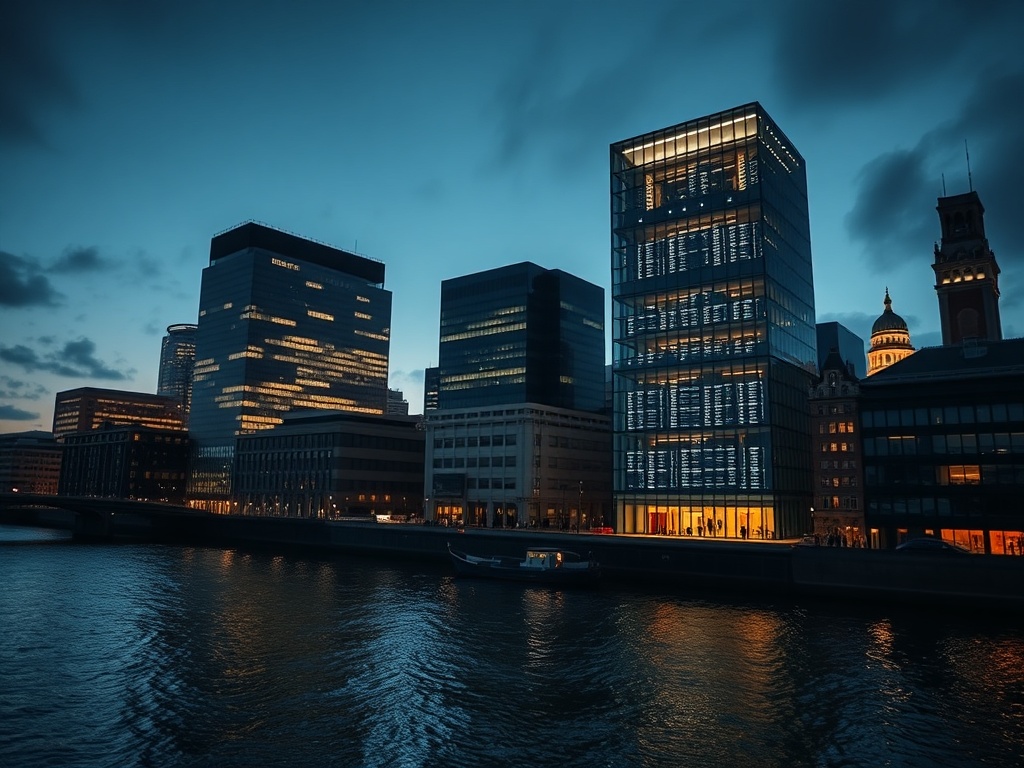
The most ambitious proposal has a name circulating among officials at the Department of Science, Innovation, and Technology (DSIT): "the dream." This is literally the term used by sources close to the British government to describe the potential for Anthropic to pursue a dual listing on the London Stock Exchange and in the U.S. A company valued at $380 billion listing on the London Stock Exchange would be the biggest image boost for that financial market in years, in a market that has watched with frustration as major tech and AI players have systematically ignored the City.
What the Friction with Washington Reveals About Anthropic's Model
It would be a mistake to read this episode solely as a political fight between Silicon Valley and the Trump administration. What is at stake is something more structural: the value architecture of an organization clashing with the incentive architecture of a client. That collision, when it occurs at this scale, is not an accident. It is the natural outcome of having built a company on commitments that its founders took seriously from day one.
Anthropic was founded with a central thesis on safety in AI development. Its refusal to allow Claude to operate in autonomous weapons applications was not a PR decision made under media pressure. It was the activation of red lines that the company had declared in advance. This has a direct implication for any executive observing this case: when the values of an organization are genuinely integrated into its operations and not merely decorating the office walls, the cost of defending them is paid in open and predictable ways.
The cost in this case is concrete: the loss of the Pentagon contract, which represented government revenue in the world’s largest market. That documented, voluntary financial sacrifice is precisely what turned Anthropic into a strategic asset for the British government. Nothing is more valuable for a nation looking to position itself as a hub for "safe and responsible" AI than a company that has demonstrated a willingness to lose money to uphold that claim.
Rishi Sunak's appointment as a senior advisor at Anthropic in 2025, the Memorandum of Understanding signed with the DSIT in February of that same year, and the subsequent selection of the company to build an AI assistant for GOV.UK services were not isolated moves. They were the patient construction of an institutional relationship that, now, at the height of geopolitical pressure for the company, becomes a real lever.
The Dual Listing Dilemma and What London is Really Buying
A listing on the London Stock Exchange is not simply a financial mechanism. It is a statement of intent about where a company anchors its regulatory and political identity. For Anthropic, which faces an active legal battle against the Pentagon's designation and operates in an environment where U.S. government hostility could escalate, diversifying its capital base and primary jurisdiction holds immediate operational value.
For the UK, the calculation is different. London has been trying for years to attract large tech firms to its stock exchange with mediocre results. The IPO of Arm Holdings in 2023 ended up in New York. The world's most valuable AI companies are listed or plan to list in the United States. A deal with Anthropic would break that pattern and give the City direct access to the frontier AI capital cycle.
What Starmer’s government is buying is not just the physical presence of a tech company. It’s buying narrative credibility: the ability to tell the world that the UK is the place where AI firms that refuse to build autonomous weapons find a home. That has value in terms of attracting talent, international capital, and positioning concerning the European Union and other partners who watch warily the military application of AI.
OpenAI already committed to expanding in London in February 2026. If Anthropic follows suit, the AI job market in the UK could tighten significantly in the next 18 to 24 months, raising hiring costs for both companies but also positioning London as the densest European hub for AI talent, with all that implies for local startups vying for the same profiles.
The Leadership That Sustains an Uncomfortable Position
There is something this episode exposes with unusual clarity in corporate analysis: the difference between an organization that has values and one that manages them. Most companies “manage” their values, meaning they apply them when the cost is low and suspend them when the contract is significant enough. Anthropic, in this case at least, stood firm when the contract was the Department of Defense of the world’s most powerful military.
That doesn’t automatically make the company a model of impeccable management. They have open litigations, a pending risk designation awaiting judicial resolution, and a reliance on venture capital that eventually demands an exit. But the executive decision by Dario Amodei to hold the red lines in the face of pressure from the White House generated something that no marketing budget can buy: the interested attention of a sovereign government willing to redesign its investment proposals around the principles of a private company.
The meeting in May in London will be the first real test of whether that credibility capital becomes operational architecture or remains just a well-told story. Office expansion is likely. A dual listing is possible. The expansion of the GOV.UK contract into more public services is almost certain. But the true outcome of this episode is already recorded: a company demonstrated that its foundational commitments have no list price, and that changed its bargaining position with all the players at the table, not just the UK.
The culture of an organization is not what is written on its values page. It is the cumulative sum of all the decisions that its leaders make when upholding a principle comes with a real and measurable cost, and the egos that do not allow them to revise those principles when pressure comes from above.