
In 2025, over 300,000 importers paid tariffs under a once extraordinary measure: the International Emergency Economic Powers Act (IEEPA). The administration of Donald Trump introduced these levies as the "Liberation Day" tariffs, creating a broad and global wave that raised over $200 billion that year alone. A cited study from the Federal Reserve Bank of New York estimated that 90% of the cost was absorbed by U.S. businesses and consumers. This was not a distant tax; it was a direct drain on margins and internal prices.
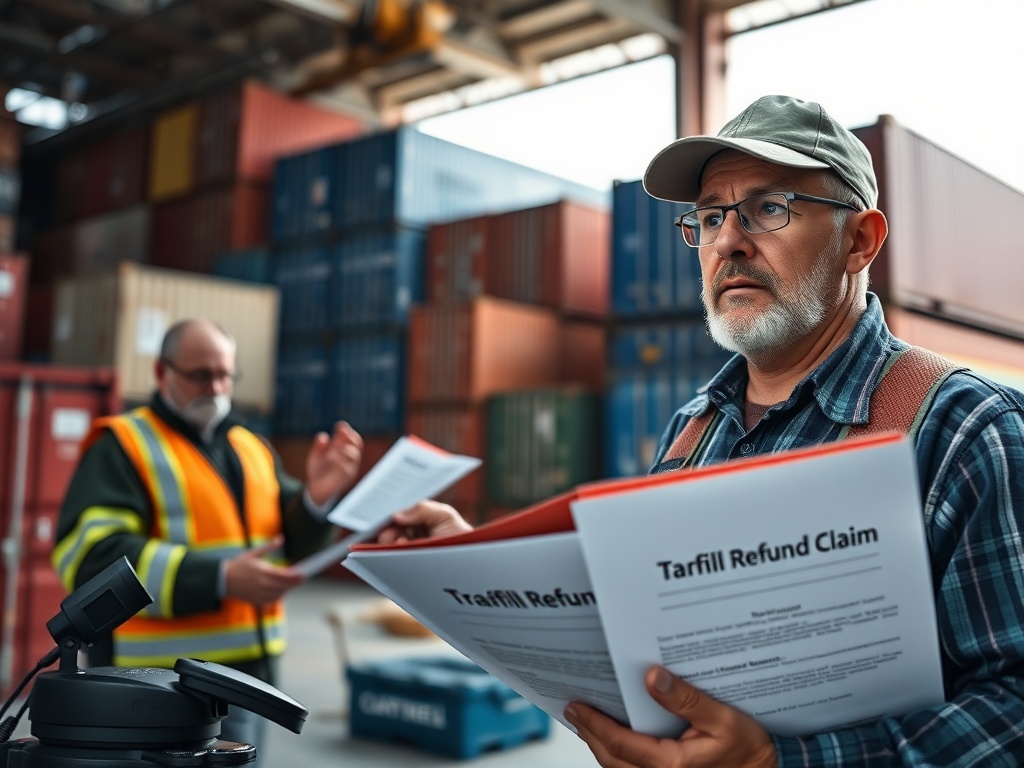
On February 27, 2026, the Supreme Court of the United States declared those tariffs illegal. However, the ruling did not close the book; it reopened it where it really hurts: cash flow. Following the decision, refund claims surged to around 2,000 submissions totaling over $170 billion, according to a report cited by Fortune. Here, the twist emerges that exposes the power dynamics at play: the government had assured courts that refunds would be straightforward; now, sources and public statements indicate strategies to withhold or delay those refunds.
What is at stake is not a technical discussion about customs. It is an uncomfortable question for any CFO: when the state collects something that later is declared illegal, that collection transforms into an operational debt with the private sector. And when that debt is stretched for “weeks, months, or years,” as suggested by Treasury Secretary Scott Bessent in television appearances and at the Economic Club of Dallas, the tariff ceases to be a cost and becomes a forced credit.
Refunds Are No Longer a Simple Process: It’s an Administrative Friction War
The heart of the problem lies in the process. U.S. Customs and Border Protection (CBP) operates with a standard “protest” mechanism that can take up to two years. Moreover, according to the briefing, more than half of the entries associated with these tariffs remained “unliquidated” as of December 2025. In practice, this creates fertile ground for delay: if the system allows for long timelines, the one controlling the funnel controls the cash.
The administration, according to cited sources, is considering methods such as disincentivizing refunds, arguing for retroactive legality via new tariffs, or even offering expedited processing in exchange for the claimant waiving a portion. None of this is an immediate judicial outcome; it signals strategic maneuvering. And that signaling matters because it alters short-term decisions: provisioning, credit lines, negotiations with suppliers, currency risk coverage, and, above all, continued importation.
The first response movements are already visible: FedEx filed a significant lawsuit on Monday, February 24, 2026, in the U.S. Court of International Trade seeking total refunds; Costco and AGS Company Automotive Solutions were already in litigation over repayments. When companies of that size move quickly, they are conveying something without needing to editorialize: the cost of waiting for the “normal path” may exceed the costs of litigation.
Neal Katyal, former acting Solicitor General and a partner at Milbank LLP, articulated it accurately in a statement cited in coverage: the government cannot promise ease to avoid a temporary injunction and then insinuate complexity when it comes time to pay. That phrase is not a moral jab; it is a diagnosis of incentive. In scenarios of intense fiscal pressure, procedural friction functions as a financing tool.
For an importing SME, this is even harsher. A giant can tie up tens or hundreds of millions and survive; a small to medium-sized enterprise that relies on inventory turnover cannot. When the refund becomes uncertain, the importer stops being a customer of the state and instead becomes its bank.
The Real Damage for SMEs: Captured Working Capital and Margins That Don’t Return
In theory, if a company “passed” the tariff onto prices, the refund should be neutral. In practice, the pass-through is seldom perfect: it’s negotiated halfway, partial absorption to sustain volume, compensated with promotions, or diluted in annual contracts. Even the dissent from Judge Brett Kavanaugh acknowledged the knot: there may be importers who already passed costs to consumers or others. That observation anticipates the battlefield: who has the economic right to the refund, who bore the final cost, and how can it be demonstrated?
For SMEs, the problem is not philosophical; it is accounting and banking-related. The tariff paid under IEEPA might have been:
When the expectation of refunds appears, a window for “recomposition” opens that many companies had already internalized as a possibility. If that recomposition is postponed, the effect is twofold: first, they overpaid; then, they are denied the return that could stabilize cash flow. In management terms, it’s the worst combination: sunk costs and uncertain recovery.
The industry often treats tariffs as an exogenous factor and continues to compete on the same fronts: price, volume, negotiation with forwarders, optimization of tariff classification. That manual works when the state acts as a predictable regulator. Here, the lesson is harsher: risk is no longer only in the tariff but in the governance of the refund.
This shift redefines the playing field for importing SMEs and manufacturers relying on global inputs. It is no longer enough to “buy better.” It becomes strategic to design operations that resist when cash gets trapped in processes. The importer that survives will be one that reduces exposure to uncontrollable variables and increases control over its cash cycle.
The New Playing Field: Less Customs Optimization, More Value Model Design
Here is where I observe the recurring error from C-Level executives in mid-sized firms: they react by copying the playbook of giants. They add layers: more consulting, more reports, more compliance tools, more lawyers. They raise fixed costs to “manage complexity” just when the system penalizes fixed costs.
The smart move is not to compete in administrative sophistication. It’s to redesign the model so that the company requires less of the refund to breathe.
In the value-cost logic, the pivot is surgical:
This last point is the major blind spot. When an SME relies on margin from imported products, every regulatory distortion strikes directly at the heart. When the SME converts part of the value into local provision, it reduces its vulnerability to a tariff and, now, to a refund that could take “months or years.”
The public discussion centers on whether refunds are “corporate welfare,” as Bessent stated. In the field, for thousands of companies, it is not corporate welfare; it’s cash correction on a collection declared illegal. And even if part of the cost was passed on, the operational damage during the intermediate period existed: inventories, financing, contracts, loss of market share.
That differential between the political debate and operational impact creates an opportunity for those who do not want to wait for the system to be kind. The SMEs that succeed will not be those that litigate better; they will be those that design a business that does not depend on a swift conclusion to litigation.
The Lasting Advantage Will Belong to Those Who Design for Friction, Not for the “Base Scenario”
The Supreme Court ruling invalidated the IEEPA as support for these tariffs but left the refund pathway in the hands of the Court of International Trade without an instant mechanism. In that gray area, a time game is being played: the government has an incentive to stretch; the importer has an incentive to recover. In the middle, the CBP possesses a long timeline process and a universe of entries that are still unliquidated.
The learning for SMEs is not legal; it is strategic. The company that manages its global supply chain as if the system were linear ends up financing uncertainty. The company that accepts friction as a market condition redesigns its value curve: less unproductive complexity, less immobilization, more revenue from local capabilities, and contracts that distribute shocks.
This does not demand more spending; it demands less adoration for the “full catalog” and more obsession with the cash cycle. It requires discipline to cut products that only add volume without resilience. It requires that C-Level executives stop competing for crumbs in the same sea of importers optimizing the same factors.
True leadership is measured in the field, validating with clients and suppliers what value they continue to pay when the regulatory cost shifts and the refund is delayed. The rest is corporate narrative burning capital to uphold a copied strategy, just when the market rewards those who eliminate what doesn't matter and create their own demand.