
The Early Morning That Changed Everything
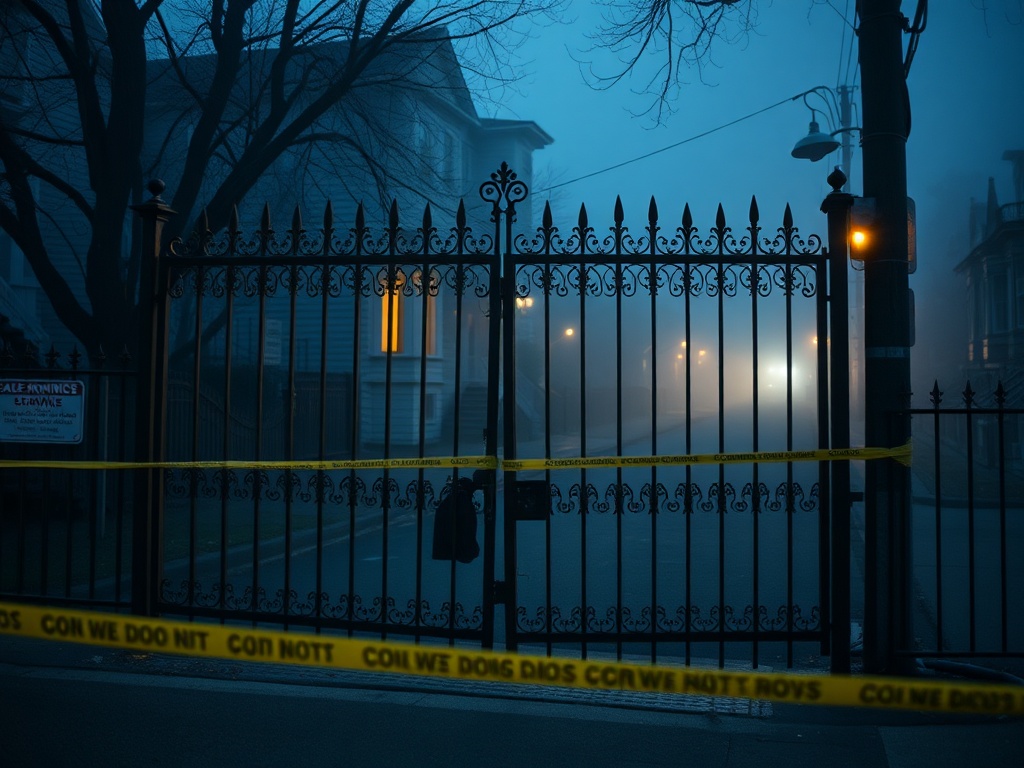
At 4:12 AM on April 10, 2026, a 20-year-old man threw a Molotov cocktail against the gate of Sam Altman's $27 million residence in Russian Hill, San Francisco. Less than an hour later, the same individual arrived at OpenAI's headquarters in Mission Bay holding a canister that he claimed contained kerosene, threatening to burn the building down. San Francisco police apprehended him without any injuries reported. The fire was contained to the gate, and physical damage was minimal.
The symbolic damage, however, is a different conversation.
Altman responded with a post on his personal blog the next day, April 11, sharing a photograph of his husband, Oliver Mulherin, and their child. He wrote with a rare honesty in corporate language: "Someone told me yesterday that they thought this came at a time of great anxiety about AI and made me more dangerous. I dismissed it. Now I’m awake in the middle of the night, angry, and thinking I underestimated the power of words and narratives." This statement isn’t just a press release; it’s an open acknowledgment of a blind spot that had been accumulating for months.
When Narrative Becomes Operational Risk
What this incident reveals isn’t just a personal security issue; it uncovers a gap between the speed with which OpenAI constructed its public narrative and the pace at which that narrative generated social frictions that no executive was willing to clearly address. For years, the AI sector operated under a nearly messianic rhetoric of progress: AI as the promise of abundance, efficiency, and liberation from repetitive tasks. OpenAI was the most visible spokesperson for that promise.
But promises have their drawbacks. When the very company heralding the future contracts with the Pentagon while its main competitor, Anthropic, publicly rejects such contracts, the narrative ceases to be inspiring for a growing segment of the population. It becomes threatening. And threats, when left unmanaged in dialogue, migrate toward more rudimentary forms of expression. A Molotov cocktail is, in organizational terms, a conversation that never happened in the right space.
I’m not romanticizing the act or its author. The attack is a crime, and the suspect faces appropriate legal consequences. What I point out is the structural pattern that preceded it: in 2025, employees at the same OpenAI headquarters had to take shelter inside the building due to threats linked to an individual with ties to anti-AI activist groups. It was a warning sign. The institutional instinct was to treat it as an isolated security incident, not as a temperature reading of the social climate that the company was co-producing with its communication.
The Loneliness of the Power Broker
One rarely discussed fact about leaders operating at Altman’s scale is the cost of being both a symbol and an individual. Altman travels with the President of the United States, meets heads of state, and manages a company valued at over $150 billion with revenues exceeding $3.5 billion by the end of 2025. This profile generates not only admiration but also the collective projection of everything people fear about concentrated technological power.
However, what his blog entry reveals is not arrogance. It’s something more interesting and uncomfortable: the public admission that he managed narrative risk the same way many leaders handle uncomfortable risks—by dismissing it until it becomes impossible to ignore. "I dismissed it," he wrote. That is the most important phrase in the entire statement, and also the most costly. Because in the chain of decisions leading to that Molotov cocktail, there were multiple moments when OpenAI’s public narrative could have incorporated more nuance, greater acknowledgment of uncertainty, and more room for legitimate dissent.
The AI sector has operated for years under the logic that moving quickly is a virtue in itself. That speed comes at a price now being paid in terms of physical security, social cohesion, and institutional trust. Companies that invest in deployment speed without proportionately investing in understanding the impact of their narratives on populations with less economic or labor adaptability eventually face frictions that no security budget can completely absorb.
The Leadership That Words Build or Demolish
Altman concluded his blog post with a call for de-escalation: "We need to dial back the rhetoric and tactics and try to have fewer explosions in less homes, both figuratively and literally.” It’s a fair statement. But it comes too late. And that latency is not a character flaw; it’s a structural consequence of how organizations built at this pace operate, prioritizing narratives of progress over narratives of shared responsibility.
The call for de-escalation is necessary. But rhetorical de-escalation doesn’t occur by CEO decree. It happens when an organization institutionalizes the habit of saying out loud what it would prefer not to say: that AI will displace jobs before creating others, that military uses have complex moral implications that deserve open debate, and that concentrating power in a few hands generates asymmetries that society has legitimate reasons to question. Those conversations, when they do not occur within, seek expression externally. Sometimes in an article. Sometimes in a march. Sometimes in a blazing gate at four in the morning.
The real work of reconstruction isn’t in the security perimeter of a $27 million mansion. It’s in the architecture of dialogue that a company of that influence chooses to have, or chooses not to have, with the world it claims to want to benefit.
Organizational culture is not the result of its values written on a wall or its press releases. It’s the accumulated footprint of all the uncomfortable conversations its leadership had the courage to engage in, and the inevitable symptom of all the ones its ego, urgency, or administrative comfort did not allow them to confront in time.