
The Margin TechnipFMC Built Without a Hero at the Center
When a company in the oilfield services sector reports a 46% expansion in its adjusted EBITDA in a single year, analysts instinctively look for the charismatic architect behind that number. They search for the vision speech, the magazine cover, the memorable quote. With TechnipFMC, that search leads to an uncomfortable place for individual leadership enthusiasts: the margin expansion was not the result of an executive genius. It was the cumulative result of organizational engineering decisions made long before the results became visible.
That merits an analysis that most financial media are not undertaking.
When System Architecture Replaces Individual Talent
In 2021, TechnipFMC posted figures that any energy services company would envy: adjusted EBITDA of $580 million, margins in its Subsea division expanding 200 basis points to 10.5%, and total orders growing by 33% year-on-year to reach $5 billion in just the subsea segment. The Surface Technologies division, on the other hand, achieved record margins with a 300-basis point expansion to 10.6%.
The question that few rigorously ask is this: what type of organizational structure produces such results, with that level of consistency, across multiple divisions simultaneously?
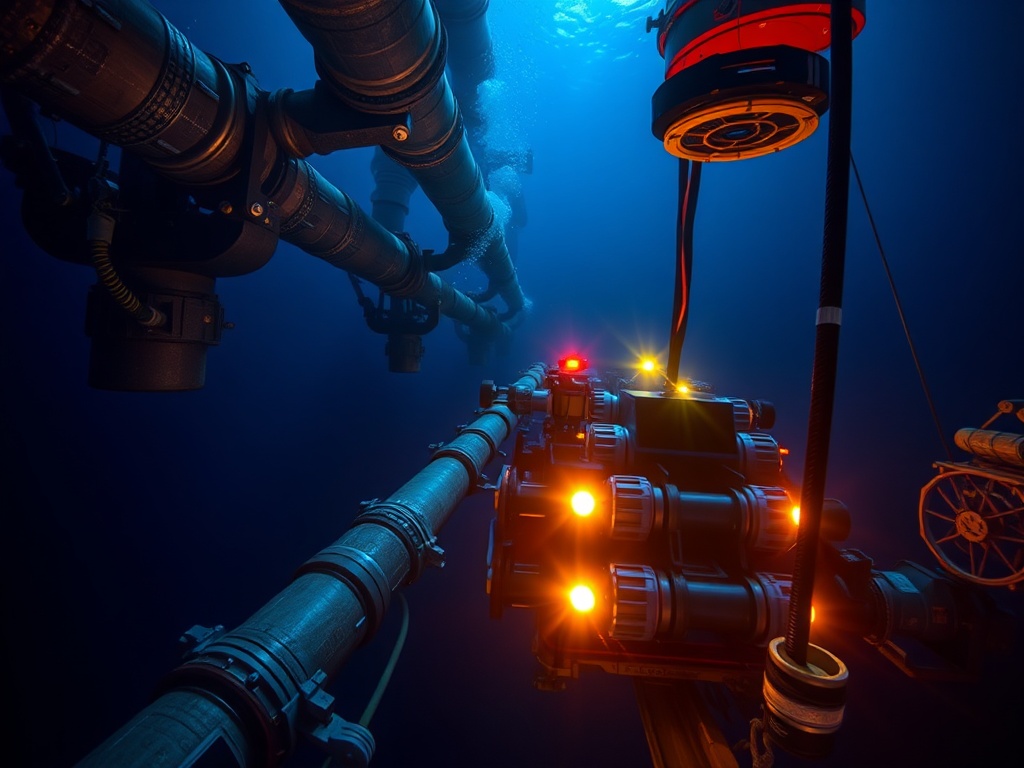
The answer lies in two architectural decisions the company made years before reaping the benefits. The first was investing in its iEPCI model, an integration of Engineering, Procurement, Construction, and Installation that positions it as the only provider capable of merging two historically separate scopes: subsea production systems and the umbilicals, risers, and flowlines. The second was developing the Subsea 2.0 platform, a customized portfolio that standardizes components, pre-approves supply chains, and eliminates entire layers of redundant engineering.
The operational results are measurable and specific: 50% reduction in size, weight, and number of components compared to previous designs, a quadrupled capacity for extending subsea connections, and a 10% reduction in capital requirements through integrated field design. In the Shell Kaikias project, this translated to a breakeven price below $30 per barrel, a threshold that redefines the economics of subsea development.
None of these results depend on someone having a brilliant idea in a board meeting. They depend on the system functioning.
The Revenue Model Trap Few See
What interests me most about the TechnipFMC case is not its current margins, but the revenue mechanics they are building for the future. iEPCI alliances generate a diversified revenue base of approximately $1.1 billion that doesn’t rely on winning bids project by project. They are long-term agreements where the client outsources the complete integration of their subsea operation. This transforms what has historically been a volatile contract business into something that resembles recurring revenue.
Add to that the iLoF service, complete lifecycle management of the subsea field, and you have a model where the first sale opens the door to decades of higher-margin services. The company was anticipating an additional $1 billion in orders related to energy transition by 2025, with an incremental opportunity in subsea connections potentially exceeding $8 billion by 2030.
This mechanic has an organizational implication that is rarely analyzed in conventional financial coverage: when the revenue model is tied to the depth of system integration and not the brilliance of individual proposals, the company needs to build institutional capacity, not dependency on personalities. It requires that knowledge resides in processes, in pre-approved configurations, in standardized supply chains. Not in the mind of an executive who might leave on Tuesday.
That is the difference between a company that scales and one that grows until its architect departs.
What Margin Numbers Are Really Measuring
There is a superficial reading of TechnipFMC’s margin expansion that attributes it to the oil price upcycle and the increased demand for offshore services post-pandemic. That reading is not wrong, but it is incomplete to the point of being misleading.
Energy sector cycles affect all competitors equally. What does not affect everyone equally is the ability to capture that cycle with ownership structure. When TechnipFMC eliminates more than half of the subsea structures of a field while maintaining the same operability, it is not just being efficient: it is transforming its clients’ capital costs into its own competitive advantage. The client pays less in total investment because the integrated system eliminates redundancies. TechnipFMC captures more margin because its execution cost drops faster than the price it charges.
That delta, that distance between what it costs to execute and what the market values the integration at, is what is expressed in the 200 and 300 basis points of margin expansion. It is not executive magic. It is organizational arithmetic.
The structural risk going forward is not that the market cools, although it could. The risk is that this logic of integration assumes standardization is enough without the organization continuing to invest in the technical depth that makes it defensible. Today's pre-approved configurations may become obsolete without an institutional R&D layer to update them. And that layer requires that knowledge be distributed horizontally in teams, not concentrated vertically in leaders.
The Standard That Separates Enduring Organizations
The TechnipFMC case offers something rare in energy sector company analyses: evidence that deep process standardization produces more sustainable value than episodic strategic brilliance. A customized portfolio with pre-approved supply chain and dedicated manufacturing capability is not an asset a competitor can replicate in a quarter. It is the result of years of coordinated decisions, many of which are invisible to the market.
This has a direct consequence for any management team reading these results looking for applicable lessons: the relevant question is not how good the CEO who led this transformation was. The question is whether the organization could replicate these results with a different leadership team. If the answer is yes, the company has a structural asset. If the answer is no, it has a failure point disguised as success.
Organizations that build enduring advantages are those where the decision-making system, operational standardization, and distribution of technical knowledge are so deeply embedded in the structure that no individual departure can destabilize them. Leaders who understand this lead with the explicit goal of becoming dispensable to daily operations, not of becoming indispensable to the public narrative. That distinction, executed with discipline and without ego, is what separates enduring organizations from those reliant on having their architect remain seated in the same chair.