
The Brain Behind Robots and the Blind Spots No One Audits
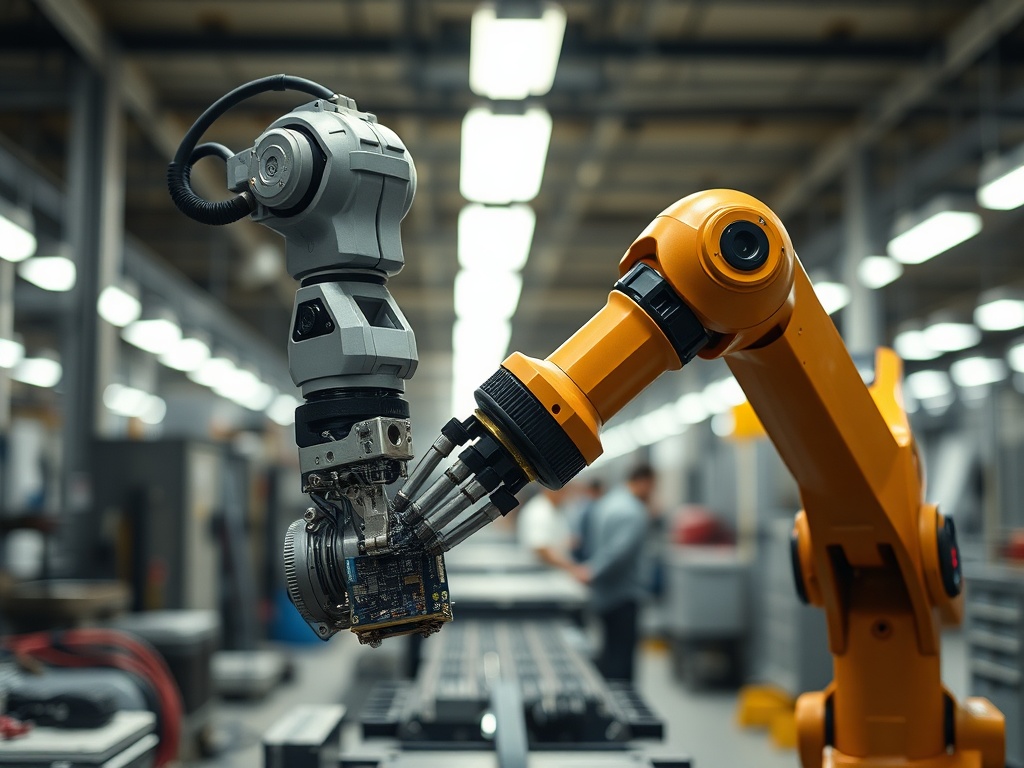
On March 16, 2026, Skild AI announced something the automation industry had been promising for decades without fulfillment: an artificial intelligence model capable of controlling any robot for any task, without the need for specific programming per application. They call it Skild Brain. Their partnerships with ABB Robotics, Universal Robots, Mobile Industrial Robots, and NVIDIA, coupled with deployments in NVIDIA's Blackwell assembly lines through Foxconn, turned the announcement into the clearest signal that general robotics has transitioned from an academic paper to productive infrastructure.
The numbers are hard to ignore. 60% to 80% performance on new tasks within hours of data collection. It can adapt to loads of up to 1.5 times the weight of the robot. A deployment cost of between $4,000 and $15,000 per unit compared to the over $250,000 demanded by traditional custom automation systems. CEO Deepak Pathak summarized it succinctly: robotics is at the same tipping point that language models were a few years ago. This is not rhetoric; it is a technical description of the moment.
But there is a dimension of this launch that press releases do not cover, and as a social capital and structural equity analyst, I cannot ignore: when a technology promises to automate physical decisions in the real world at an industrial scale, the composition of the team that designed it stops being a human resources data point and becomes a financial risk variable.
The Technical Promise and What Supports It
Skild Brain operates as what its creators describe as an omnidirectional base model: it trains on synthetic data generated in simulation, available human behavior videos from the internet, and real data collected during productive deployments. It does not learn a task; it learns to learn tasks. The infrastructure that supports it includes HPE Cray XD670 systems with NVIDIA HGX H200 for training and eight NVIDIA L40S for visualization, plus NVIDIA's physical simulation models, Cosmos and Isaac Lab.
What makes this model strategically distinct from its competitors is not only the technical capability but the structure of the data that feeds it. Each productive deployment generates new data that improves the model, enabling new deployments that generate more data. It is a feedback loop whose speed scales with the number of OEM partners. ABB, Universal Robots, and MiR are not just customers; they are nodes in a distributed learning network. Skild's competitive advantage does not lie solely in the model: it lies in the speed at which that model updates under real conditions.
This has direct financial implications. With $1.4 billion in funding, Skild is building what they internally call an AI factory, integrating training and production into a single flow. Licensing the model via API to OEMs generates recurring revenue while the volume of deployments progressively reduces the marginal cost of adapting to new tasks. The unit economics of the model strengthens over time, rather than erodes. That is structurally different from selling hardware or automation consulting.
The Bias that Trains Before Anyone Notices
Here lies the tension I am interested in diagnosing. Skild Brain learns from two main sources: algorithmically generated physical simulations and human behavior videos available on the internet. The second component is the one that demands the most scrutiny.
The human behavior videos populating the internet are not a representative sample of how humans interact with the physical world. They reflect the patterns of those who produce and consume digital content en masse: specific demographic segments, concrete geographies, types of work and home environments that are overrepresented online. A model trained on that basis will learn to manipulate objects, navigate spaces, and recover from failures according to the physical patterns of that subset, not according to the actual diversity of the industrial environments into which it will be deployed.
This is not speculation. It is the documented mechanics of bias in imitation learning systems. When that bias is installed in a robot operating in a manufacturing plant in Malaysia, at a construction site in Mexico, or in a logistics warehouse in Nigeria, the gap between trained behavior and the real environment generates performance failures that no laboratory benchmark anticipates. And those failures carry concrete operational costs, not abstract ones.
The question that OEM partner boards should be asking is not whether the model works in Pittsburgh. It is whether the team that designed the training data selection criteria included individuals with direct experience in the physical environments where the model will be deployed at scale. Because if that team is homogeneous in terms of origin, geography, and work experience, the blind spots of the model are not technical accidents. They are predictable consequences of a deficient social architecture at the design table.
What Robust Social Capital Would Do Differently
Skild's alliances with ABB, Universal Robots, and MiR are transactionally solid. Each OEM contributes deployment volume; Skild contributes intelligence. The cycle closes in on itself. But there is a critical difference between a transactional partner network and a network with genuine social capital: the former maximizes data flow within known parameters; the latter actively expands the parameters.
A network with robust social capital would incorporate plant operators in emerging markets into the model's design, maintenance technicians with decades of experience in uncontrolled conditions, and workers who know the rough edges of the physical world that no simulation reproduces faithfully. Not as external consultants validating a finished product, but as active participants in defining which data matters and why.
This is not corporate altruism. It is resilience engineering. Models that fail under extreme conditions or in contexts not represented in their training data do not fail silently: they generate operational incidents, liability claims, and, at best, retraining costs that erode exactly the cost advantage Skild promises. The promised tenfold reduction in ownership cost only holds if the failure rate in production remains low. And that rate directly depends on how representative the data is that the model learned from.
The $1.4 billion funding gives Skild the capacity to build that network differently. The scarcity is not of capital. It is of structural will to include the voices that do not appear in online videos in the data architecture.
The Fragility that Scales Along with the Model
There is a pattern I have seen repeat in every cycle of massive technological adoption: companies that lead the first phase of scaling are the ones with the most advanced technical architecture. Those that lead the maturity phase are those with the most robust social architecture. The first advantage can be replicated with enough capital. The second takes years to build and cannot be purchased in a funding round.
According to its own data, Skild is at the tipping point of the first phase. The model works. Partners are signed. Productive deployments have begun. What determines whether this company captures the automation market in the next decade is not whether Skild Brain can clean a desk or insert a component on an NVIDIA assembly line. It is whether the model learns to operate just as effectively in environments its designers never visited.
The boards of companies integrating Skild Brain into their productive infrastructure must demand an audit of the training data composition with the same rigor they audit a financial balance sheet. An AI model that automates physical decisions in diverse environments but was trained on a homogeneous data universe is not a technological asset; it is an operational liability with an uncertain expiration date.
The next time the technology committee of any of these boards reviews deployment progress, let them observe who is sitting around the table where model design decisions were made. If they all share the same educational background, the same reference geography, and the same experience of the physical world, they are not looking at a competitive strength. They are looking at the exact inventory of their collective blind spots, and those blind spots are already encoded in the model they just contracted.