
Singapore Turns Up the Heat and Sends a Bill to the World
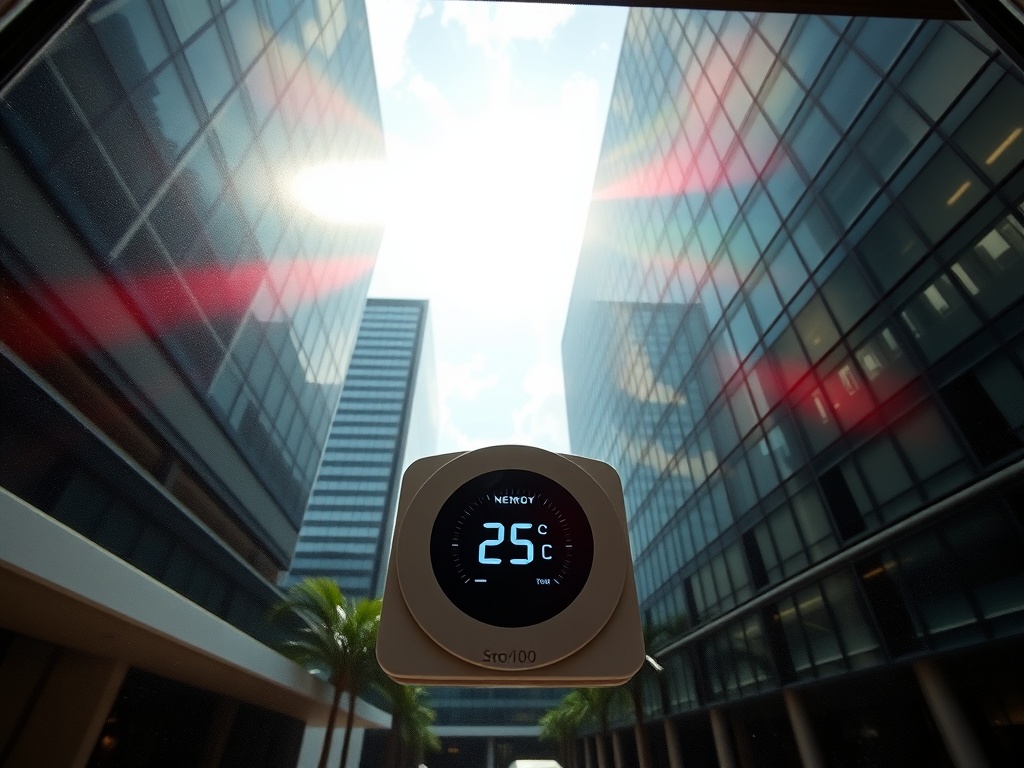
On April 8, 2026, the Singaporean government issued a directive that, at first glance, seems modest: raising the air conditioning thermostat to 25°C or higher in all ministries, state agencies, and statutory boards. No exceptions. Simultaneously, it called for the shutting down of non-essential equipment, managing lighting and elevator schedules, and accelerating the installation of smart sensors and LED lighting in public facilities.
If you read this merely as a measure of austerity amid the conflict in the Middle East, you’re missing half the story.
Singapore imports 100% of its natural gas and oil. It has no domestic reserves. Every kilowatt it consumes depends on a logistical chain that crosses the Persian Gulf, the Strait of Hormuz, and maritime routes whose costs are currently inflated by geopolitical risk. Deputy Prime Minister Gan Kim Yong warned on April 7 that GDP growth in the first quarter of 2026 showed resilience, but that subsequent quarters will face direct pressure from the conflict. He also anticipated a "more pronounced increase" in regulated electricity tariffs for the next quarter, a system in Singapore that adjusts every three months based on fuel costs.
That’s not just a political warning. It’s a market signal with real implications.
Energy Dependency as a Structural Risk, Not Bad Luck
Asia, in general, and Singapore, in particular, have built decades of growth on a premise that was never seriously questioned: imported fossil fuel would remain cheap, abundant, and politically stable. Air conditioning is not a luxury in Singapore; with annual average temperatures hovering around 31°C and humidity exceeding 80%, it’s a survival infrastructure for work. The city-state consumes electricity per capita at levels comparable to European economies facing much more extreme climates, yet with a critical difference: Europe has energy interconnections with dozens of neighboring countries. Singapore has the sea.
This geographical isolation turns any shock in the natural gas markets into an immediate fiscal issue for the public sector and a direct hit to the wallets of households and businesses. The quarterly regulated tariff structure acts as an amplifier: when fuel prices rise, the transfer to the end consumer happens at a speed that few economies experience so directly and transparently.
What the government is doing now, ordering 25°C instead of the usual 22°C or 23°C that dominate public offices, is not political window-dressing. It is a real reduction in electrical consumption across the country's largest network of controlled facilities, with an immediate effect on aggregate demand. Each additional degree on a central air conditioning system can represent between 8% and 10% savings in consumption. Multiplied by the total area of government facilities in a high-density city-state, the cumulative impact is measurable in gigawatt-hours per quarter.
When the State Operates as a Price Signal
There’s something more intriguing than the measure itself: how the government framed it. The Ministry of Sustainability and the Environment and the National Environment Agency released a joint statement that concluded with a phrase worth analyzing: "The government is committed to leading by example in national energy conservation efforts."
This type of language is not empty rhetoric in Singapore. It’s a governance signal with operational consequences for the private sector. When the state adjusts its own consumption behavior in a mandatory and visible way, it generates two simultaneous effects: first, it directly reduces its exposure to electricity bills at a time of rising tariffs; second, and more importantly from a macroeconomic perspective, it establishes a legitimacy foundation for regulators and chambers of commerce to press the business sector in the same direction without the need for emergency legislation.
The government also expanded the call to households and businesses: use public transport, choose more energy-efficient appliances, replace air conditioning with fans where feasible. These recommendations, which in another context would sound like a low-impact awareness campaign, come at a time when the anticipated rise in electricity tariffs for the next quarter is already scheduled. This transforms them into advice with concrete domestic arithmetic behind.
The acceleration of LED installations and smart sensors in public buildings reveals another layer of analysis. It is not just short-term operational savings. It’s an investment in measurement and control infrastructure that, once in place, allows for demand management with near real-time granularity. A government building with occupancy sensors and automated climate control not only consumes less; it becomes a manageable asset within a smart energy grid. Singapore is purchasing future optionality under the pressure of a present crisis.
The Model Under Threat for the Entire Region
What’s happening in Singapore is not an isolated episode. It is the clearest and most documented demonstration of a pattern affecting the entire energy architecture of Southeast Asia: decades of economic growth built on the availability of cheap imported fossil fuel without developing redundancy or source diversification at a sufficient scale.
South Korea, Japan, Thailand, and Vietnam share variants of the same problem. They all depend significantly on oil and gas from the Gulf. They all have energy-intensive industrial sectors. They all operate with tariff structures that transfer shocks to consumers with delays ranging from weeks to months. The difference is that Singapore, due to its size and institutional transparency, makes it visible more quickly.
For business leaders in the region, this moment carries a concrete financial reading: cheap, imported energy is no longer a constant on which to build cost models. Companies that do not audit their exposure to electricity tariff volatility and do not incorporate distributed generation, active demand management, or long-term contracts with less volatile sources in the next twelve to twenty-four months will be operating with a structural risk that does not currently appear on their balance sheets but will certainly show up in their operating margins.
Singapore has just conducted that audit publicly, mandatorily, with the state apparatus as the primary subject of correction. Leaders who understand this signal before their competitors will have a twelve-month advantage to redesign their energy cost architecture. Those who wait for the bill to arrive will only receive the bill.