
The Russian License Revealing the Price of Energy Stability
On March 12, 2026, the U.S. Department of the Treasury issued a 30-day license authorizing the delivery and sale of crude oil and petroleum products of Russian origin that were already loaded onto vessels by that date, valid until midnight Washington time on April 11, 2026. The official explanation, articulated by Treasury Secretary Scott Bessent, was precise: a "narrowly designed" measure aimed at stabilizing energy markets amid disruptions linked to the ongoing conflict with Iran, without providing significant financial benefits to Russia.
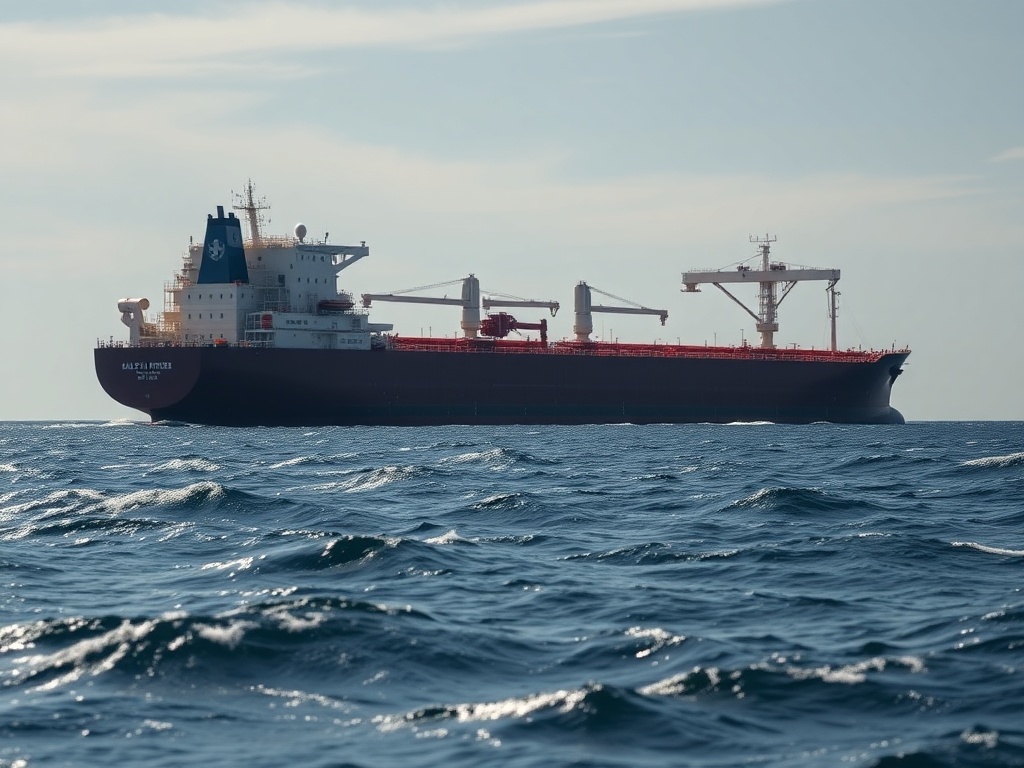
The key data making this news relevant for a CFO is the volume: 124 million barrels of stranded Russian oil at sea. That figure isn't a minor detail—it represents floating inventory with immediate financial value. Just hours before the announcement, benchmarks surpassed $100 per barrel for the first time in almost four years; following the license, prices retreated. The market interpreted what it really is: unblocking physical supply that already existed without needing new production.
I view this as financial architecture on a geopolitical scale. The license does not aim to "fix" the conflict. Instead, it seeks to lower the cash burden that the energy shock imposes on businesses, consumers, and governments. When energy supply breaks down, it disrupts the profit and loss statements of half the globe.
A Waiver Is Not a Gesture—It’s an Inventory Valve
The license comes with a condition that alters the nature of the movement: it only applies to shipments already shipped as of March 12. This makes it an inventory valve, not a capex measure. It does not incentivize new investment, nor does it promise future flows, and that's exactly what makes it efficient for the declared objective.
In simple financial terms, a supply shock elevates prices because the market pays for immediate scarcity. If "tradeable" barrels that were blocked by regulatory restrictions become available, the market adjusts through two channels.
First, via expectations: oil prices are not just marginal costs; they include risk and availability premiums. Allowing those barrels into the market reduces the premium from fears of a shortage.
Second, via logistics: 124 million barrels won't turn into gasoline tomorrow, but they do rearrange routes, substitutions, and refinery schedules. This reordering lessens the value of paying any price today.
On the same day as the announcement, the U.S. Department of Energy reported a release of 172 million barrels from the Strategic Petroleum Reserve in a coordinated effort involving 32 countries from the International Energy Agency to release 400 million barrels. This is relevant due to balance discipline: when the government uses inventory to flatten prices, it's temporarily swapping economic stability for the consumption of a strategic asset.
For an energy-intensive company, this translates into something tangible: a week with Brent or WTI above $100 is not just a headline; it exerts direct pressure on gross margins, on working capital, and on covenants if the added costs erode EBITDA. The license acts as a mechanism to contain that erosion.
The Cost of $100 Per Barrel is Paid in Margin and Cash Flow
When oil prices rise, public conversation centers on the pump. In corporate finance, the impact arrives in layers.
The first layer is the direct cost: transportation, energy generation, petrochemical inputs, plastics, fertilizers, and a long list of others. In sectors like logistics, aviation, manufacturing, or food, fuel isn't a "flexible" expense in the short term. If a company cannot pass on the price to customers, the shock hits directly to the margin.
The second layer is working capital. When input prices rise, the nominal value of inventory and accounts payable increases. If there’s volatility as well, suppliers shorten terms and demand guarantees. The typical result is a cash shortfall just when liquidity is most needed.
The third layer is financing. Rising energy costs fuel inflation and tighten financial conditions. Even without touching rates, perceived risk rises, and spreads widen. Companies that rely on refinancing debt or short-term lines feel the adjustment before anyone else.
The Treasury's decision can be better understood as macro damage control. The very context described in the sources speaks of a historic disruption due to the conflict with Iran, with blockages or paralysis in the Strait of Hormuz, through which approximately one-fifth of global oil exports pass. The International Energy Agency deemed this the largest supply disruption in history, with an estimated drop of 8 million barrels per day.
In such a scenario, any available barrel reduces volatility. The license does not seek "cheap" in absolute terms; it aims to prevent prices from reaching levels that destroy demand through consumption reduction and, consequently, economic activity.
The Paradox of Sanctioning When the Market Pays a Premium
The uncomfortable point is clear, which is why the license is temporary and limited. According to data cited in the coverage, Russia would be gaining up to $150 million per day in additional budgetary income due to the elevated price levels, with sustained demand from India and China. The same information estimates an additional $3.3 to $4.9 billion by the end of March 2026.
That arithmetic lies at the heart of the paradox: if global prices increase sufficiently, the sanctioned seller can earn more even while selling less volume or with discounts. In commodities, price drives everything. That’s why Bessent insisted that the measure would not provide a significant financial benefit to the Russian government, even though the high-price environment is already generating a tailwind for Russian fiscal revenues.
What this license does is separate two aspects:
1) The sanction on future flows. It does not allow new shipments to be loaded after March 12.
2) The need to clear an inventory bottleneck. It allows what is already loaded to be delivered and sold.
In financial architecture, this is akin to allowing the liquidation of immobilized inventory to prevent the supply chain from rotting. When inventory becomes trapped, the system does not "purify"; it congests, alternatives become more expensive, and less transparent parallel markets emerge.
There’s also an immediate precedent: On March 5, a 30-day waiver was issued specifically for India to purchase stranded Russian oil. On March 12, the license was expanded. The sequence suggests a pattern of controlled escalation: first, targeted solution; then expansion when the supply shock becomes general.
What CEOs and CFOs Should Do When the Regulator Moves the Board
For business leaders, learning is not geopolitical; it’s operational.
First, energy management should be treated as margin risk, not just a procurement issue. With oil prices above $100, the practical question is how much of your P&L is indexed directly or indirectly to energy and how long it takes to pass on price increases. If your billing cycle is 60 or 90 days while your costs are updated weekly, you’re financing the shock with your own cash.
Second, when a government releases inventories or unblocks barrels, the market can drop quickly. That punishes those who hedge late and at high prices. The discipline here is not to "predict price"; it’s to define internal hedging rules tied to exposure and price transfer capacity.
Third, this license highlights the importance of designing more elastic cost structures. If your model has high fixed costs and little room for adjustment, any volatility in inputs forces you to seek financing at the worst possible time. Cost flexibility is not theoretical; it’s about being able to negotiate with suppliers, adjust production, and manage inventories without compromising service.
Fourth, energy shocks also create opportunities for traders and companies with robust balance sheets. A market with stranded inventory, discounts, and regulatory changes creates arbitrage opportunities. The ethical and compliance line becomes more stringent, which is why the finance area needs to work closely with legal and compliance from the sourcing design stage.
The underlying message from the Treasury's move is that when supply is cut, the regulator uses liquidity and inventory tools to ensure the economy does not bear the full price of panic. Companies that survive these episodes well are not those who "guess" better, but those with sufficient cash control to make decisions without urgency.
The Final Discipline is Measured in Cash Collected from the Customer
The Treasury license is a reminder that stability has a price, which is paid in inventory decisions, strategic reserves, and temporary exceptions that seek to contain a shock. For a company, the translation is direct: input volatility leads to margin volatility, and if margin falls, cash flow rules.
When the energy market becomes chaotic, external financing turns more expensive and selective. In this environment, the only structure that maintains control is one that converts sales into cash collections quickly enough to pay rising costs without mortgaging the balance sheet, because customer payments validate the sustainability and control of the company.