
Microsoft Gains Time with Anthropic to Monetize Autonomous Work
On March 9, 2026, Microsoft introduced Copilot Cowork, an evolution of Microsoft 365 Copilot aimed at something more ambitious than drafting emails or summarizing meetings: completing tasks from start to finish in the background, with checkpoints for the user. The innovation is not only functional but also strategic. Microsoft integrated Claude from Anthropic and its Claude Cowork agent framework into Microsoft 365, despite having invested over $13 billion in OpenAI.
The financial reading is straightforward: Microsoft boasts a massive installed base of 450+ million business seats of Microsoft 365, but Copilot, despite impressive adoption metrics, accounts for only 15 million paid seats. When a new product penetrates just a fraction of such a dominant incumbent, the bottleneck is rarely "technology." It is usually willingness to pay, governance, perceived risk, and clarity of return.
Copilot Cowork and the new Microsoft 365 E7 at $99 per user/month (effective May 1, 2026) represent Microsoft's attempt to bridge this gap: moving from "AI that assists" to "AI that delivers finished work" and, crucially, charging defendably against corporate budgets.
The Multi-Model Shift is More About Accounting Than Ideology
The announcement was marketed as a confirmation of the "multi-model" strategy: selecting the best engine for each task. In practice, Copilot Cowork does two things at once. First, it incorporates reasoning and agentic execution via Claude and Anthropic's “agentic harness,” as explained by Jared Spataro, head of AI marketing for work at Microsoft. Second, it anchors that execution in the customer's internal data through the Work IQ layer, which takes context from emails, files, meetings, and chats.
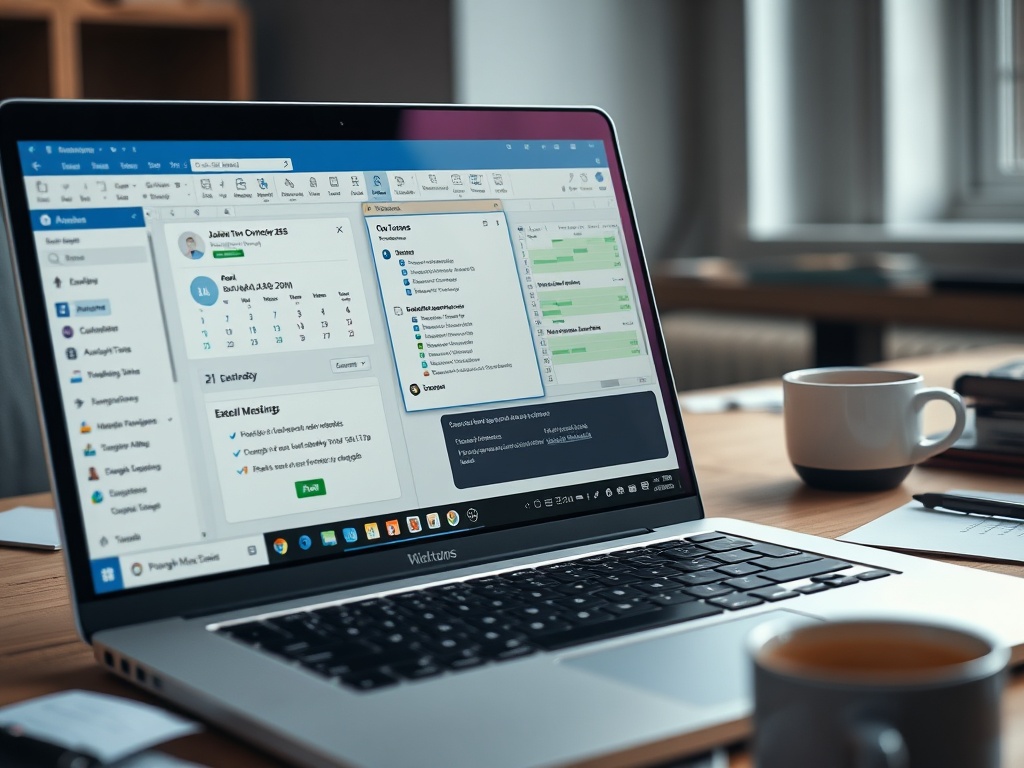
That second part defines the business model. An agent without corporate context produces drafts. An agent with access to calendars, Teams, Excel, Word, and compliance policies can deliver operational outputs: reschedule meetings, compile travel notes, build competitive analyses in documents and spreadsheets. Charles Lamanna, president of Business Applications & Agents, illustrated this with examples of executing lengthy tasks.
When a provider like Microsoft shifts the product towards “doing” instead of “suggesting,” the conversation with the CFO changes. No longer is it a discussion about a convenience license; it becomes a matter of productive capacity, internal control, and operational risk. That’s why Copilot Cowork operates in a sandboxed cloud environment within the client’s tenant, featuring auditable actions and security, governance, and compliance policies.
The integration with Anthropic also reveals urgency. Claude Cowork launched in January 2026, coinciding with a drop of over 14% in Microsoft’s stock. The markets are quick to read: if the “agent layer” becomes commoditized, part of the value of productivity software becomes questionable. Microsoft responds with the typical dominant player’s play: integrating the rival’s advancements, bundling them with business control, and selling them as standard.
Adoption Math Forces the Product Towards Execution
The numbers Microsoft shared are both good and insufficient. Paid Copilot seats: +160% year-on-year. Daily usage: up 10 times. Customers with over 35,000 seats: tripled. 90% of Fortune 500 using Copilot and 80% using Microsoft’s AI agents.
The problem lies in the denominator. 15 million paid versus 450+ million business seats of Microsoft 365. Despite high percentage growth, the business has yet to capture the larger potential of its profit and loss.
In a suite like Microsoft 365, value is captured when functionality becomes “non-negotiable” for everyday work. Drafting and summarizing compete against habits, templates, human assistants, and cheaper point solutions. Executing complete tasks begins to compete against work hours, delays, and coordination. The point is not philosophical: it’s budgetary.
For a CFO to approve massive expansion, a simple numerical story is needed. If a license costs $99 per month in E7, the annual cost is $1,188 per user. In many organizations, this amount is justifiable if the agent saves a fraction of time for qualified personnel or reduces the cost of errors and rework. Microsoft is pushing Copilot towards activities where savings manifest in deliverables: finished documents, analyses in Excel, coordination of calendars, project plans.
There’s another effect. When the agent executes, the cost of failure also rises. A poorly written summary is an annoyance. A mishandled agenda change or an incorrect competitive analysis document could have business repercussions. This compels Microsoft to sell, alongside the agent, traceability and control, as these are prerequisites for adoption to scale in regulated sectors and large enterprises.
E7 and Agent 365 Aim to Capture Margin Through Bundling and Control
Microsoft announced a new licensing tier, Microsoft 365 E7, priced at $99 per user/month, which packages Copilot, identity management, and Agent 365 for agent administration. Also mentioned is Agent 365 at $15 per user.
Behind these prices lies a financial architecture logic: converting a technically diffuse capability (agents) into a clear, recurring, and defendable line of spending. Agents are hard to budget when they appear as “just another function” within a suite. However, when bundled with identity, management, and compliance, they are sold as risk reduction and operational control.
It’s also a move to safeguard margins against competition. Model providers may press prices down in inference over time. If Microsoft relied solely on “tokens,” the unit value would tend to compress. With E7, Microsoft ties value to orchestration within the tenant, to Work IQ, and to governance, making it harder to compare in a pricing table.
The obvious risk is the perception of bundling. Packaging security, identity, and agents may accelerate sales in enterprise, but it could also spark regulatory debates or push some clients to seek modular alternatives. Commercially, Microsoft seems to be accepting this risk because the cost of not monetizing quickly is greater: if the agent layer establishes itself outside of Microsoft 365, the incumbent loses pricing power.
Another consideration is cost. Agents increase computational consumption, and margin depends on how much of that consumption is offset by price and operational efficiency. Microsoft did not publish unit costs, so the analysis must focus on observable trends: it is moving value capture to premium licenses and a realm where the customer pays for control and outcomes, not for “access to a model.”
The Real Product is Governance of Work, Not the Model
Ethan Mollick raised a practical concern: transparency about which models Copilot is using and whether it can degrade to “lower” or “older” models without notification. This discussion may seem technical, but it translates to immediate financial implications.
If a provider sells productivity at a fixed price per user, the natural incentive is to manage computing costs. If the customer cannot audit which engine executed which task, it becomes difficult to attribute failures, measure consistency, and justify renewal. In large enterprises, renewal isn’t decided by an enthusiastic user; it is determined by a committee that looks at tickets, risks, compliance, and complaints.
Microsoft is attempting to solve this with operational design: Copilot Cowork runs within tenant boundaries, with security and auditable actions. That “audit trail” is the bridge between promise and purchase: allowing conversion from an experimental tool to a production tool.
There’s another point: by licensing Claude and its agent framework, Microsoft is buying speed. Anthropic demonstrated a rapid iteration capability with Claude Cowork. Historically, Microsoft is slower in product cycles. Integrating a proven framework reduces the time to the "billable moment," especially when competitive pressure comes from Salesforce, model providers themselves, and open alternatives.
The power dynamics are shifting: OpenAI and Anthropic, while being partners to varying degrees, are also building direct pathways into enterprise workflow. Microsoft responds by becoming the “operating system” for agents within Microsoft 365. It does not need the model to be exclusive; it needs the customer to feel that operating agents outside their tenant is a risk and a cost.
The Direction is Clear: Less Demos and More Verifiable Recurring Revenue
Copilot Cowork signals that Microsoft understands the main bottleneck of Copilot: penetration. Growing 160% over a small base does not solve the value capture issue in a platform with 450+ million seats. The integration with Anthropic and the agent execution layer points to the only path that shifts budgets: delivering finished work with control.
If E7 manages to convert a relevant portion of that installed base into $99 monthly licenses, Microsoft gains a lever of recurring revenue that justifies infrastructure, protects margins, and reduces dependence on a single model provider. If execution fails or transparency is perceived as lacking, agents will migrate to point solutions, and the suite will lose pricing power.
The financial outcome isn’t defined by the elegance of the model, but by Microsoft’s ability to convert "doing" into a stable line of business expense. When massive adoption occurs, it will not be fueled by enthusiasm for AI; it will be generated by a bill that renews because the delivered work can be audited and, above all, because the client's money keeps coming in month after month as the only validation that sustains business control.