
Meta Bets $600 Billion on the Future, Costing 16,000 Jobs
In January 2026, Meta Platforms announced plans to spend between $115 billion and $135 billion on infrastructure for the year ahead. For context, this is nearly double the $72 billion spent in 2025, equating to between 55% and 67% of its projected revenue for the fiscal year. This level of capital intensity is unheard of for a profitable tech company. Wall Street's immediate reaction was clear: if this money is being funneled into servers, something else must be cut. According to a Reuters report on March 14, 2026, that something represents approximately 16,000 jobs, or 20% of a workforce totaling 79,000.
The corporate narrative surrounding this decision is polished and coherent: artificial intelligence will replace internal tasks, operational efficiency will increase, and the resources saved will fund a major push toward “personal superintelligence.” A company spokesperson labeled the reports as “speculative,” yet senior executives appear to have already tasked their teams with preparation plans for layoffs. This is not speculation; it is named contingency planning.
What intrigues me is not the number itself. I am more interested in what that number reveals about decision-making when an organization has been constructed around the vision of a single individual.
The Model That Works Until It Doesn’t
Meta has been in a cyclical pattern for four years that is starting to become recognizable. In 2022, the company cut 11,000 employees. In 2023, there were another 10,000 jobs eliminated. In January 2026, 1,500 more jobs vanished from its augmented reality division, and now potentially another 16,000. Each round of cuts comes with a different strategic thesis: first, it was the “year of efficiency,” followed by a pivot toward the metaverse, then a partial abandonment of that same metaverse, and now the rush toward artificial superintelligence.
The issue is not necessarily that a company changes direction; companies that don’t pivot often fail. The problem lies in the speed and magnitude of each pivot, which suggests that the previous direction was not built on shared institutional analysis, but rather on an individual conviction that scaled over the organization without sufficient structural cushioning. When the leader changes their mind, the whole company changes direction. And when the organization shifts direction en masse, those who do not fit the new vision become expendable.
This is the systemic cost of building a company where strategic thinking fundamentally resides in a single node. It is not a moral accusation but rather a diagnosis of organizational architecture. A healthy structure distributes strategic direction capacity among multiple leaders with real authority, so no pivot—however ambitious—requires emptying the building to redecorate.
Evidence of this structural fragility can be found within the products themselves. The Avocado model has missed three consecutive deadlines and currently lags behind Google, OpenAI, and Anthropic in the most relevant benchmarks. Early versions of Llama 4 generated publicly questioned benchmarks. The most ambitious version of that model, internally known as Behemoth, was shelved after missing its planned launch date for summer 2025. Amid this competitive deficit, the company is reportedly exploring a temporary licensing agreement with a direct competitor, Google, to feed its own AI offerings.
When Capital Replaces Capability
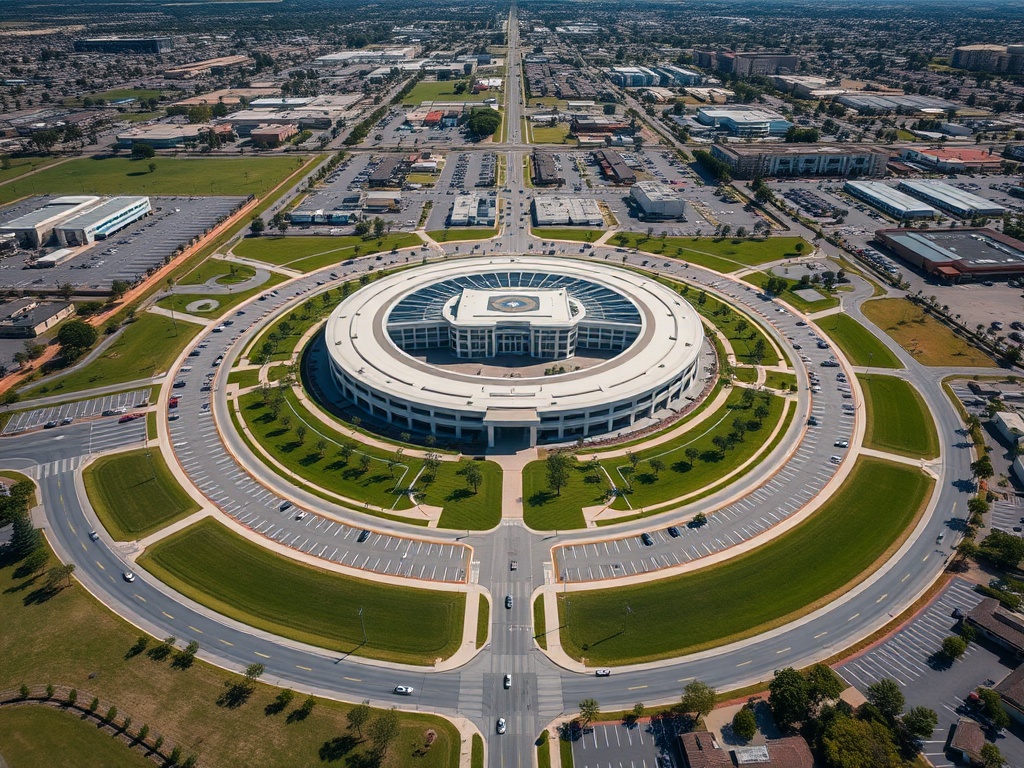
There is a financial logic underpinning Meta's decision that deserves to be analyzed without condescension. The company has committed to a $600 billion investment in data centers through 2028. In order to finance this while maintaining acceptable margins for shareholders, it needs to reduce its operational cost base. The largest and most flexible line item for any tech company is payroll. The arithmetic is brutal but coherent.
Moreover, Meta has allocated $14.3 billion to bring Scale AI and its founder on board as the head of AI, and it is negotiating the acquisition of the Chinese startup Manus for at least $2 billion. These moves reveal a clear bet: to replace generalist internal talent with specialized external talent in AI, complemented by massive computing infrastructure.
The question this strategy leaves open—and one that no corporate release answers—is whether the ability to build cutting-edge AI systems can be bought or cultivated. The companies that currently lead this space did so not primarily through emergency acquisitions. They built internal cultures where research, rapid failure, and retention of senior technical talent functioned as cumulative advantages. Meta is attempting to compress this process with capital. It may work, but the history of major tech bets suggests that money accelerates existing trajectories; it rarely creates capabilities that were not already in place.
Meanwhile, 16,000 individuals—many hired in the last three years under promises of transformative missions—are paying the price for a strategic correction that, in a more distributed organizational model, could have been identified earlier and executed with less institutional violence.
What the Tech Sector Is Not Accounting For
Meta does not operate in a vacuum. By March 2026, the U.S. tech sector had already accumulated 45,000 layoffs that month, with over 9,200 directly attributed to AI-driven automation. The pattern is systemic: major platforms are dismantling the workforces they built during the pandemic-driven expansion to redirect that capital toward AI infrastructure.
There is a paradox that no CFO is mentioning in their earnings calls: the same companies that argue that AI will enhance human productivity are the ones laying off humans before that productivity has been demonstrated at scale. It is not necessarily hypocrisy. It is the result of operating under simultaneous pressures from capital markets that reward immediate efficiency and a tech race that penalizes delay.
But the structural lesson for any organization watching this moment from the outside is more precise. Companies executing these moves with the most internal turbulence are predominantly those where strategy was never truly collective. Where the board approved what the founder had already decided. Where intermediate leaders executed visions instead of building them. When that architecture needs to pivot, the only available mechanism is massive surgery.
Organizations with genuinely horizontal leadership structures, where multiple leaders have real mandates to question and co-build strategic direction, are not immune to pivots. But they execute them with greater surgical precision because the diagnosis arrives sooner, from more angles, and with less distance between those who decide and those who implement.
The System No Founder Can Replace
The maturity of an executive team is not measured by the ambition of its vision or the magnitude of its capital wager. It is measured by that organization’s ability to maintain a coherent strategic direction without relying on one person being right at the right time.
Meta is doing exactly the opposite: concentrating more decision-making power, more capital, and more narrative in a single center of gravity while reducing the human mass that could distribute that load. The bet may turn out to be correct. The $600 billion in data centers could build the infrastructure that defines the next computational decade. But if it proves wrong, the organization will lack the institutional mechanisms to detect it in time or the human resilience to absorb the impact.
The mandate for any executive structure that observes this moment honestly is to build systems where strategy is not the property of any one individual, where course corrections are an institutional process and not a personal prerogative, and where talent is not the first asset that is liquidated when capital needs to be redirected. This architecture is not organizational idealism; it is the only one that allows a company to scale into the future without needing to empty its present every time the map changes.