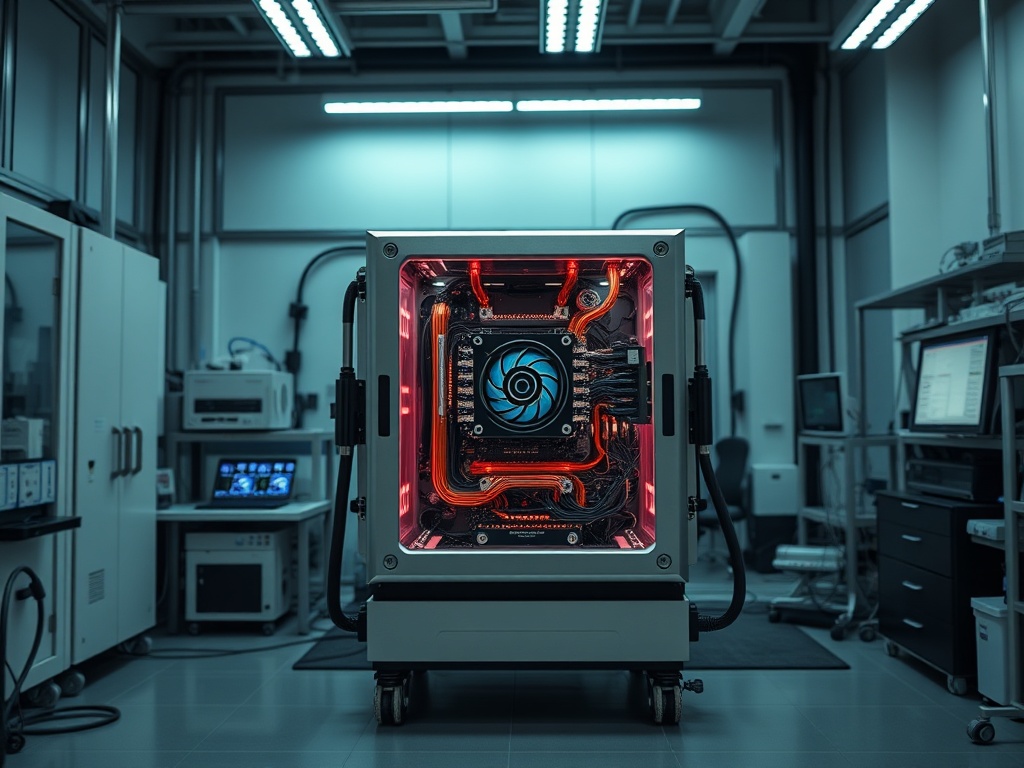

# IQM and the Quantum Era: A $1.8 Billion Valuation
The news about IQM, the Finnish company that is about to become one of the first publicly traded quantum firms in Europe, is not only a sign of technological innovation but also a reflection of how startups are redefining the economic playing field. With a valuation of $1.8 billion, IQM faces the challenge of proving the robustness of its business model in a highly specialized and emerging market.
Market Fragmentation in Quantum Computing
IQM's value does not solely lie in its technological advancements, but also in its ability to apply market fragmentation in its strategy. By focusing on a specific segment—quantum computing solutions for research institutions and advanced tech companies—IQM avoids the trap of trying to be everything to everyone. This approach enables them to optimize resources and maximize the impact of their innovations.
However, the real test will be their ability to expand their customer base without diluting their value proposition. Here, market fragmentation becomes an art of precision: expanding the target market while maintaining the essence and effectiveness of their product.
The Cash Generation Machine
In the world of startups, explosive growth can be a double-edged sword. IQM must demonstrate that its model isn’t a house of cards with high fixed costs, but rather an efficient machine that generates cash by charging upfront. This approach ensures that the company can sustain its growth without relying excessively on additional funding rounds.
The key here is to transform fixed costs into variable ones, allowing IQM to adapt to market fluctuations and changes in demand. While quantum technology is a field rife with uncertainties, a flexible financial model could be the buffer that IQM needs to navigate turbulent waters.
Adaptability: The Key Element in Business Architecture
Adaptability is an essential pillar in the architecture of any successful business. In the case of IQM, their ability to modify specific components of their operational engine will be crucial for surviving market shocks. Changing the distribution channel, adjusting prices, or redefining their target segment are strategic moves that IQM must master to remain relevant.
The quantum market is still nascent, and companies that succeed will be those able to pivot quickly in the face of new opportunities and threats. Adaptability is not merely a competitive advantage; it’s a structural necessity in an environment where the rules are still being written.
Building the Quantum Future
IQM is in a unique position to lead the quantum revolution in Europe. Its success or failure will depend on how well it integrates the components of its business model to generate measurable and sustainable value. History teaches us that brilliant ideas are not enough; execution and financial structure are the pillars that support long-term growth.
In a world where technology advances at breakneck speed, companies do not fail due to a lack of innovation, but because the pieces of their model fail to fit together to create real value. IQM has the opportunity to prove that it can be more than just a technological promise: a robust and efficient machine that defines the future of quantum computing.