
IEA Buys Time with 400 Million Barrels
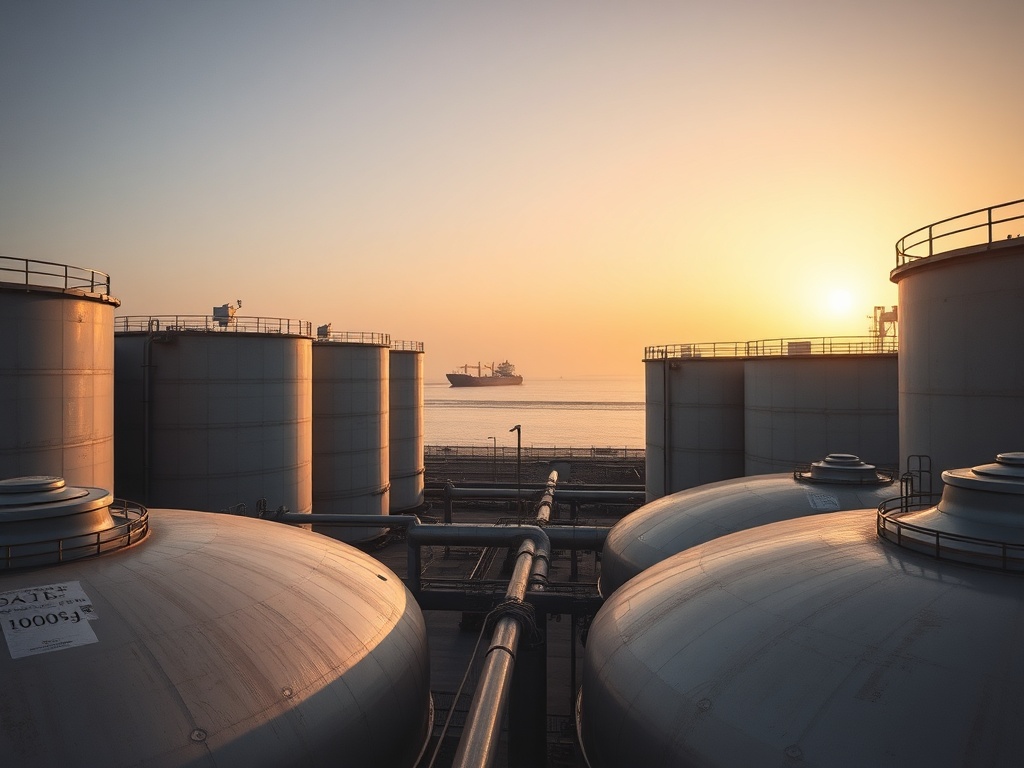
The International Energy Agency (IEA) has just executed a decision that, by its sheer scale, serves as a market signal more than a mere logistical maneuver. Its 32 member countries unanimously approved the coordinated release of 400 million barrels of crude oil from strategic reserves. This marks the largest release in the agency's history.
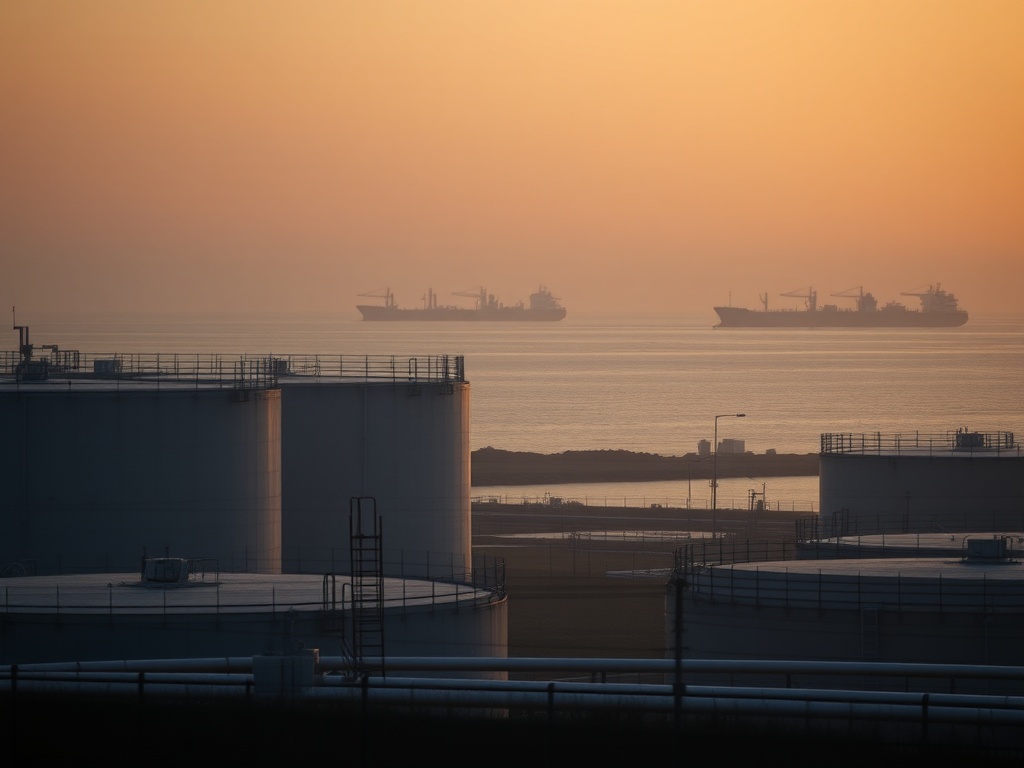
The catalyst for this action is not a recession, a storm in the Gulf of Mexico, or a coordinated production cut. Rather, it is a direct geopolitical shock: the ongoing conflict between the U.S. and Israel against Iran has resulted in an effective blockade of the Strait of Hormuz, with tanker traffic nearly at a standstill. Prior to the blockade, approximately 20 million barrels per day passed through Hormuz, nearly one-fifth of global supply. The harsh math: the announced release is equivalent to about 20 days of the flow lost from Hormuz.
Simultaneously, the market was already doing its job of punishing and rationing through prices. Crude in the U.S. was $86 per barrel on March 11, up 35% from a month earlier, after reaching $119 on March 9. Gasoline averaged $3.57 per gallon, compared to $2.97 a month prior. IEA's Executive Director Fatih Birol framed it in terms of energy security and affordability, emphasizing that the key condition for genuine stabilization is the resumption of transit through Hormuz.
A Strategic Release: Not a Solution, But Time Management
To this point, the facts. Now for the strategic angle: this massive release does not “solve” the oil problem. It manages time. And time, in a supply shock, is the asset that allows for three other things to occur: demand adjustments via prices, logistical reconfiguration, and security decisions to reopen routes.
When an organization like the IEA uses the reserve instrument on this scale, it is conducting two simultaneous operations. The first is physical: injecting barrels into the system so that refineries and distributors don’t run dry, even if it requires blends and qualities that necessitate technical tweaks. The second is psychological: dampening expectations of chaotic shortages. In commodities, expectations drive inventories, hedges, and trade credit.
The 400 million barrels have a notional value exceeding $34 billion at $86 per barrel, but that number is less important than the message: the IEA is willing to burn through a significant portion of a cushion that, before the release, totaled around 1.2 billion barrels altogether. This cushion exists to buy stability in episodes of disruption. Utilizing it at its historical peak confirms that the baseline scenario has shifted from “tension” to “material interruption.”
The equivalence with 20 days of Hormuz flow elucidates the measure's limitations. If the disruption lasts less than that horizon, the release acts as a bridge. If it lasts longer, the market will revert to relying on high prices, demand destruction, and flow reassignment. In strategic terms, this serves as an intervention to prevent initial panic and allow for adjustment mechanisms to operate without immediate breakdown.
There is also a governance angle: the unanimity among 32 countries in this large action suggests that the political cost of inaction outweighed the financial cost of depleting reserves. In energy crises, coordination is more valuable than the ideological purity of “letting the market fix it.” This coordination prevents chaotic measures country by country that often generate hoarding and greater volatility.
The Market is Punishing Prices and Consumers are Paying
The price numbers accompanying the news are not mere decoration; they are the transmission metrics of the shock to the broader economy. A 35% jump in crude prices in a month and gasoline rising nearly 20% in the same period reintroduces an old concern for any CFO: energy has once again become an unstable component of unit cost, not just another input.
For sectors with direct consumption (transportation, logistics, aviation, intensive manufacturing), the impact extends beyond merely paying more. A domino effect emerges: reevaluation of shipping rates, increased marine insurance premiums, rerouting logistics, and renegotiations of fuel-indexed contracts. Practically, the rise turns what were “fixed-price” agreements into “conflict” agreements, marked by review clauses and compliance tensions.
Consumers, for their part, feel the hit in a visibly frequent category. Gasoline is an inflationary perception multiplier, even when other prices are more stable. Statistics show that inflation was steady in February 2026 prior to the shock. With energy prices rising, stability becomes fragile: it does not require everything to go up; it only takes a rise in what everyone buys weekly.
The IEA's role here is to reduce the probability that the increase becomes nonlinear. It is not seeking to drive crude back down to the $60-$70 pre-war reference level but rather to prevent spirals. The market itself was already flirting with much higher price scenarios, with analysts warning that prices could reach $150 if the blockade persists. A release of this magnitude aims to cut off the tail of that distribution: reducing the odds of an extreme event that collapses demand and confidence.
From a business strategy perspective, the key operational lesson is that energy costs are once again a survival factor in margin calculations. Companies relying on cross-subsidies, cheap financing, or optimistic elasticities find themselves exposed. In shocks, the business models that can transfer costs, reduce consumption, or pause capacity without breaking down take precedence.
Strategic Reserves Do Not Replace Routes, They Only Buy Operational Margin
The most serious point from the announcement, and the easiest to overlook, is Birol's emphasis on the determinative factor being the resumption of traffic through the Strait of Hormuz. Reserves are inventory; Hormuz is infrastructure. Inventory gets consumed. Infrastructure enables flow.
This compels thinking of the system as a chain, not a well and a refinery. The disruption at Hormuz is not simply “there are missing barrels,” but rather “there are missing barrels that have this route, this transit time, and this risk profile.” Even if oil is available from other sources, global logistics face friction: vessel availability, port windows, crude compatibility, refining capacity, and financing of in-transit inventories. The increase in risk also elevates working capital costs, as inventory ceases to be a restful asset.
In that context, the announcement that the U.S. military is exploring options to escort commercial ships if requested by the president is not a mere military detail; it is relevant to economics. If the security of the route changes, insurance premiums, delivery times, and effective availability shift. The IEA releases barrels to avoid an immediate vacuum while the state apparatus seeks to reopen the logistical tap.
Even Saudi Aramco's warning about “catastrophic consequences” without tanker traffic should be viewed in systemic terms: while high prices could increase revenue per barrel, a blockade reduces export volumes and strains supply commitments. Oil, at the end of the day, is a continuous flow business; without routes, potential income fails to materialize.
For an energy-consuming company, this combination implies something uncomfortable: risk is not managed solely by purchasing cheaper or negotiating with suppliers. It is managed through continuity plans that include hedges, tactical inventories, supplier diversification, and, when applicable, partial substitution through electrification or efficiency. None of this can be decided in a week; hence, the “time” that the IEA buys is the critical resource.
Competitive Advantage in 2026 Will Be Cost Structure, Not Narrative
At Sustainabl, we view these episodes through a financial engineering lens: which models hold up when input prices rise and capital becomes demanding. An historic release of reserves is an admission that the system is under stress. Under stress, simple structures survive.
The most vulnerable companies are those that confuse growth with subsidy. If your unit economics already depended on cheap fuel to sustain deliveries, or on low tickets with intensive logistics, an energy shock exposes you bluntly. The same applies to companies that turn operational decisions into fixed costs: rigid fleets, inflexible contracts, plants unable to modulate production, and staffing structures designed for “always-increasing volumes.”
This episode also reshuffles investment priorities. In the short term, discipline becomes paramount: energy efficiency, renegotiation of indexed contracts, route and supplier reviews, and inventory management. In the medium term, bets that once were “projects” now become operational safeguards: electrification of processes where returns are defensible, more diversified supply agreements, and selective automation focused on reducing waste rather than inflating complexity.
This environment also rewards small teams with good judgment. Technology can help model scenarios and optimize consumption, but it doesn’t replace tough decisions: pausing unprofitable lines, adjusting prices, prioritizing high-margin customers, or redesigning services to consume less energy per unit. In a shock, the entity that executes quickly and simply retains cash.
The IEA’s release, due to its scale, marks the onset of a phase where energy and geopolitics once again dictate operating conditions even for companies that do not perceive themselves as “energy-related.” The market has already priced in risk, and governments have activated inventories to mitigate it. Over the coming months, competitiveness will depend on how much operational margin each organization has to absorb volatility without destroying its cost structure.