
Autonomous Cleaning Becomes Infrastructure: The Business Is No Longer in the Robot, But in the Fleet
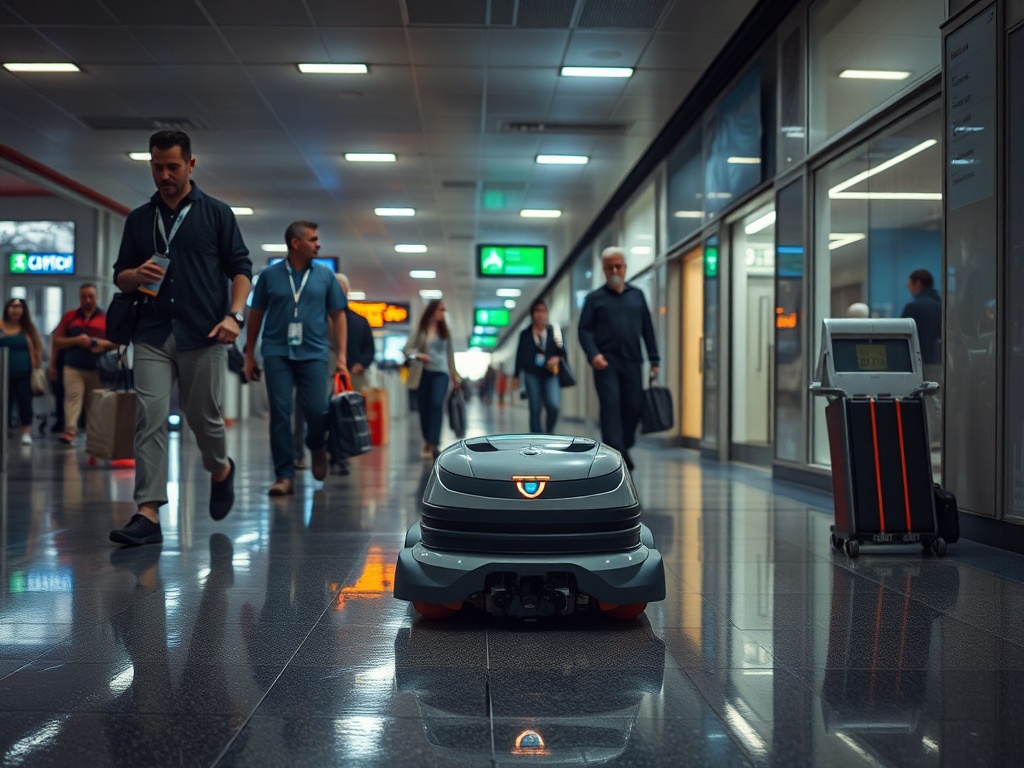
For years, discussions about cleaning robots evoked images of domestic life: a circular device slowly maneuvering, bumping into a chair, and returning to its charging base. That represented a product. However, what Forbes describes in "Armies Of Detail Robots: New Generations Of Autonomy" depicts a different reality: "armies" of detail robots operating in dense and dynamic commercial spaces—office hallways, hospitals, airports, retail environments, warehouses—where they coexist with people, schedules, protocols, and uncompromising safety standards.
This shift alters the business landscape. The focal point transitions from the device to the deployment system: how it is purchased, integrated, maintained, monitored, secured, and financed. Within this context, companies like Cardinal emerge as critical players, assisting in scaling deployments, structuring managed services, and financing fleets.
This market is experiencing growth from a still relatively small base, yet it operates at the pace of an emerging industry. Various reports place the global market for professional cleaning robots around USD 3–4 billion in 2023, projecting a compound annual growth rate of approximately 20–25% towards 2030. In parallel, the broader service robotics market is estimated at USD 37–45 billion in 2023, also showing high double-digit projections. These figures don’t need to be precise down to the last cent to illustrate a key point: it’s a segment transitioning from pilot projects to budget line items.
From Cute Pilot to Building Operating System
The operational shift is fundamental. A Roomba—however advanced—operates in a more confined environment. In contrast, the “detail robots” mentioned by Forbes must navigate areas where reality isn’t tailored for machines. Hallways with human traffic, carts, doors swinging open, layout changes, shuffled cleaning shifts, and varying restrictions by zone.
Thus, the significant advancement isn’t merely autonomy; it’s autonomy within processes. The discussion emphasizes issues of safety and right of way: who yields, how collision-avoidance rules are coded, and how coexistence is normalized. This is not merely an abstract ethical issue; it involves operational continuity and risk management. If a robot “works” but the building establishes restricted zones, limited access times, or requires manual oversight protocols, the anticipated savings evaporate.
Precedents for scaling already exist. SoftBank Robotics claims to have deployed over 20,000 units of its commercial autonomous vacuum Whiz since early 2020. Brain Corp, a provider of autonomy software for commercial cleaning machines, reports enabling more than 20,000 autonomous robots and over 100 billion square feet cleaned annually (according to company disclosures in 2023–2024). Gaussian Robotics has registered deployments in over 40 countries with tens of thousands of robots. Therefore, the question is no longer if the technology “exists” but whether operations can be standardized.
In this scenario, robotics starts resembling not a purchase of equipment but rather fleet management. A fleet necessitates telemetrics, preventive maintenance, replenishing consumables, training staff, and a control dashboard that converts usage hours and square footage into service compliance. The robot becomes a replaceable piece; the installed capacity emerges as the real product.
The Business Model is Shaped by Financing, Service, and Risk
In corporate environments, the bottleneck is rarely “I like the robot.” It’s the contract. Hence, the significance of this new wave: companies that facilitate massive deployments through services and financing. In practice, this often takes the form of robot-as-a-service: the client stops purchasing the asset and begins paying for availability, operational hours, or results (e.g., covered square footage).
From a business mathematics perspective, this shift accomplishes three primary objectives.
First, it converts capex into opex. For facility management, where budgets are rigid and cost pressures are continuous, this reduces internal friction. For the provider, it opens a recurring revenue stream but also compels mastery in operational discipline: if the robot stops, revenue halts.
Second, it shifts the focus from “cost of the robot” to unit economics per site. A massive deployment isn’t secured through a demo but by demonstrating the total cost per shift reduces, or that the same human team can cover more area with less variance. In a market where cleaning typically comprises one of the largest operational budget items for a building, the incentive is clear: even modest penetrations move volume.
Third, it alters the risk landscape. When the fleet belongs to the provider, the provider assumes failures, obsolescence, and maintenance liabilities. Therefore, the true product ultimately becomes a combination of operation + software + support. Furthermore, Forbes makes a passing comment on an emerging issue: with robots sharing spaces with people, insurance, liability, and internal building standards become integral to the model design. Autonomy without governance leads to invisible costs.
This ties into a helpful yet side observation: iRobot, the most recognized brand in consumer imagination, reported a revenue drop from USD 1.56 billion in 2021 to USD 890 million in 2023 (according to company filings). The proposed acquisition by Amazon—announced in 2022 and finalized in 2024 following regulatory scrutiny in the EU—did not proceed. This isn’t a lesson about “bad hardware,” but rather a reminder that the domestic market is fiercely competitive and value is captured differently when the customer is a household versus a facility operator.
The Corporate Portfolio: Where the Balance Between Today and Tomorrow Breaks
When a company scales the adoption of cleaning robots, it’s essentially engaging all four boxes of its portfolio.
1) Current Revenue Engine. In sectors like retail, airports, healthcare, or hospitality, cleaning is part of brand promise and regulatory compliance. It’s not just about savings; it’s also about reducing incidents, keeping fewer areas closed, and maintaining standards. Robotics can enhance consistency, but only if integrated seamlessly into daily service.
2) Operational Efficiency. This is where robotics shines when purchased correctly. If the robot frees human time for high-contact tasks—such as disinfecting critical surfaces, restocking, or internal customer service—the outcome isn’t just cost savings, but increased control. Conversely, if deployment adds extra supervision or generates “workarounds for the robot,” pure efficiency becomes negative.
3) Incubation. A typical mistake is to expect a pilot to already “pay off the investment” as if it were a mature business. In service robotics, pilots should be measured by operational learning: compatibility with the site, recurrent failures, human intervention rates, staff acceptance, and navigational stability during peak hours. This fosters a learning curve that can later be capitalized.
4) Transformation for Scaling. This is where the uncomfortable part occurs: standardization. If every building demands exceptions, the provider cannot scale, and the client fails to consolidate benefits. Integrators and fleet managers—the roles that Forbes associates with Cardinal—exist precisely because the leap from 5 robots to 500 isn’t linear. It requires processes, contracts, 24/7 support, spare parts, and service level agreements.
The anti-bureaucracy point is straightforward: deployment fails when the organization attempts to merge a fleet into the same slow purchasing, compliance, and approval circuits used for traditional cleaning contracts, without creating a specific path for operational technology. Additionally, it fails when the innovation team plays at “testing robots” without having the operational owner seated at the table from day one.
Competitive Advantage Is Built on Standards, Not Demos
Forbes emphasizes the coexistence of human and robot, and the “right of way.” I translate that into a concrete competitive advantage: those who turn norms into routine gain stability and profit margins.
In commercial robotics, performance isn’t sustained by a demo in an empty corridor. It’s maintained by internal building policies, signage, staff training, and clear interaction rules. This reduces incidents, simplifies insurance, and eliminates cultural friction. At the supplier level, it also creates repeatable operational data: when a robot gets stuck, which layouts prove problematic, and what hours maximize coverage. In an industry projected to grow at double-digit rates, the one that standardizes first captures the most valuable learning.
The deployment figures already seen in the market suggest that the “infrastructure moment” is near. Over 20,000 units of Whiz, tens of thousands enabled by Brain Corp, and the global presence of manufacturers like Gaussian indicate the channel is open. What remains, and this is the core of the article, is for the corporate client to purchase this as capacity: a clear contract, agreed operational metrics, and well-defined responsibilities.
For C-Level executives, the message is not “buy robots.” It’s about designing the decision system so robotics enters as an operation, not a toy. This requires separating metrics: the core demands continuity and cost; exploration demands learning and security; transformation necessitates standardization and repeatable contracts.
Viability Is Defined by Governance That Protects the Core and Accelerates Scale
The new wave of autonomous cleaning robots is pushing a model shift: from selling machines to providing managed service with financed fleets and integrated coexistence rules. When an organization protects the core business box while simultaneously creating an operational lane to deploy and standardize this technology with learning metrics upfront and service metrics as they scale, the balance between present profitability and future exploration becomes viable.